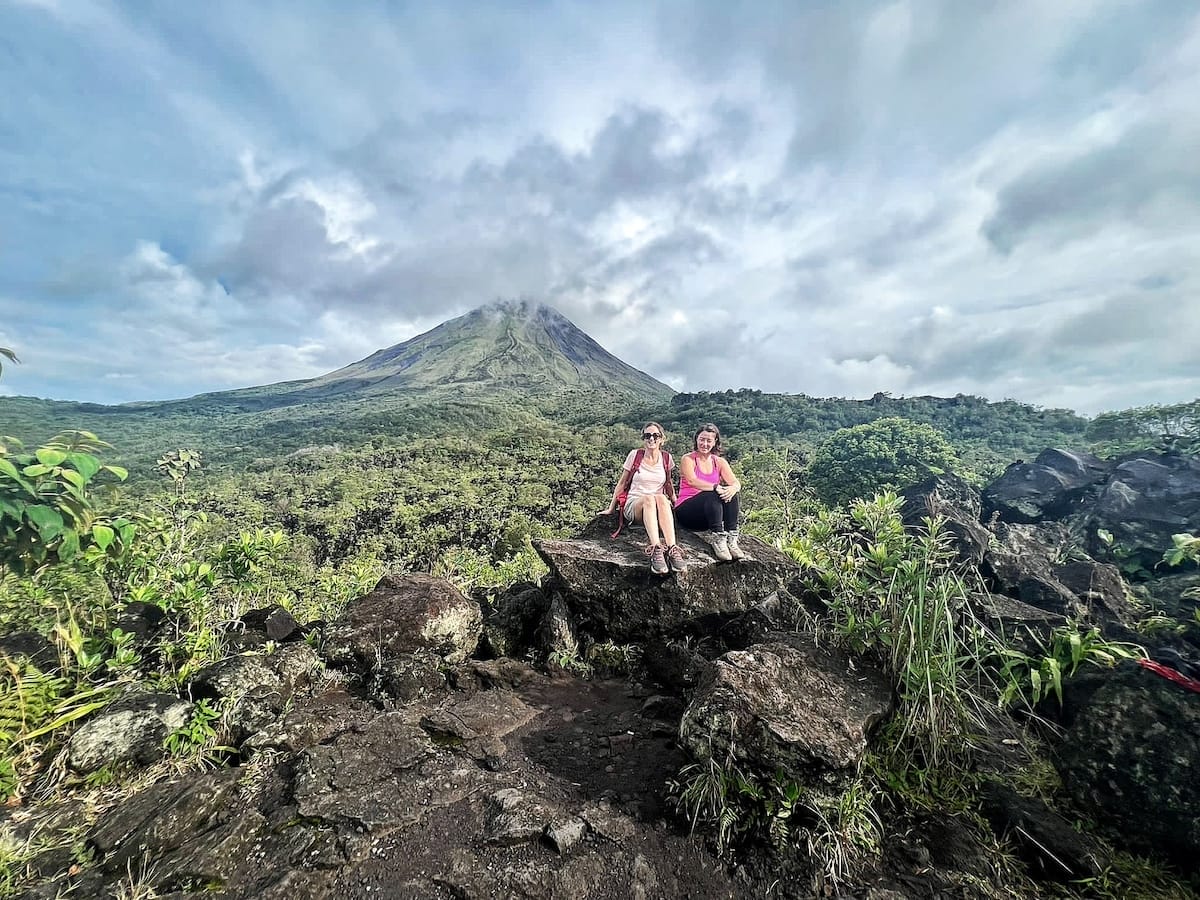
Is Costa Rica safe for tourists? Costa Rica has always been considered one of the safest countries for travel in Central America. I have traveled to Costa Rica twice – once on a really recent trip with my sister, and never had any safety issues. In fact I found this to be one of the safest places I have ever visited.
While there’s sometimes volatility, Costa Rica has remained steady as one of the best countries in Central America for adventure vacations, beach holidays, and exciting spring breaks.
There’s been an increase in reported violence and theft in Costa Rica, however. For example, in March 2023, the U.S. Embassy in Costa Rica released a statement advising against travel to San Jose and other parts of Costa Rica.
There are also more and more news reports surfacing about general crime and drug-related crime in Costa Rica, spreading a little more fear among travelers and backpackers.
So, even with all this commotion and discussion of rising crime rates, is Costa Rica safe for tourists? The simple answer is yes, Costa Rica is still safe for tourists.
As long as you know how to prepare and stay aware of your surroundings, you’ll have the time to explore the beautiful beaches, charming coastal towns, and the beauty of the rich jungle canopy.
After discussing whether Costa Rica is safe, in this post I will share my best Costa Rica safety tips for solo travelers.

Is Costa Rica Safe?
Yes, Costa Rica is safe.
Costa Rica is incredibly diverse and has a little something for everyone. You can spend weeks enjoying the pristine white sand beaches and scuba diving in the calm waters.
But of course, there are always things to be wary of, and it’s essential to travel to Costa Rica with specific expectations.
According to MacroTrends, Costa Rica has experienced a consistent increase in crime rates from 1990 to 2024, except for a few dips here and there. This tool can also be used to compare crime rates between countries.
To put Costa Rica’s crime rate in perspective, it’s rated significantly lower than Colombia, Mexico, and Guatemala, all popular tourist destinations.
Even further, Statistica data ranks Latin American countries by homicide rate in 2022, and Costa Rica doesn’t even make the list of the top 12 highest homicide rates. Jamaica, Ecuador, Colombia, Mexico, Puerto Rico, and others appear well before Costa Rica.
So, while Costa Rica has made headlines more often for crime and theft concerns, it’s still a safe place for tourists, especially when compared to safety concerns in Cartagena or even Playa del Carmen, Mexico, safety standards.
However, as always, you should be wary of possible Costa Rica safety precautions, scams, and dangerous neighborhoods before traveling to Costa Rica, regardless of the statistics.

Is Costa Rica Safe For Tourists? Actual Dangers And Annoyances In Costa Rica
Petty crime in Costa Rica
Petty crimes and crimes of opportunity are the most common crimes against tourists in Costa Rica. These can manifest in many ways, from advanced pickpocketers to extra pushy hawkers to straight-up robberies.
Here are some tips on things you can do to avoid falling prey to petty crime in Costa Rica:
- Avoid wearing flashy jewelry that draws attention to yourself
- Don’t leave your belongings unattended
- Stay in populated areas and avoid dark alleys where crime can easily take place
- Don’t be out late at night, especially if you’re alone
You can’t 100% limit the risk of petty crime, but you can take precautions and stay aware of your surroundings to minimize the chances greatly.

Avoid ‘dangerous’ areas in Costa Rica
One of the best ways to stay out of trouble is to avoid those “trouble” areas. There’s no doubt some cities and towns are safer than others.
Here are some areas to avoid in Costa Rica, or at least be extra cautious if you plan to spend time there:
San Jose: This is the capital city and likely where you’ll fly into and out of. Unfortunately, it’s not the safest place in Costa Rica, but chances are you won’t be spending much time here. Many travelers don’t even stop there at all. I did and did not have issues. To keep safe, you should avoid going out at night and take guided tours when possible.
Despite San Jose not being the safest and most exciting tourist destination in Costa Rica, there’s still a lot to do in San José. As long as you limit activities to daytime and take a guided tour when possible, you should have a great experience in the cultural hub.
Limon: This is a gorgeous coastal city with a large national park, but it has also been under much scrutiny lately due to crime. If you go here, you should stay on guard as thieves specifically look for tourists to rob.
Puntarenas: This is another beach-side cultural city with great nature, beaches, and even museums. Unfortunately, crime against tourists has been on the rise, and it’s best to be safe if you travel here.
Liberia: This is yet another gorgeous beach town, but beach crime and robbery have also skyrocketed in recent years.
Staying out of these places won’t guarantee a problem-free trip, and it’s possible to visit these cities and have an amazing time without any trouble. However, it’s important to check your Costa Rica itinerary and know what to expect.

Transportation safety in Costa Rica
Public transportation around Costa Rica is safe and one of the best methods. That said, pickpocketing and bag snatching are two of the most common crimes against tourists, and it can be very easy on crowded buses.
If you’re taking buses, keep your belongings close at all times and pay attention to your surroundings. You should also follow your instincts, and if someone is too close to you, try to create some space.
Don’t let this deter you from taking buses or public transportation, though. As I said, it’s still completely safe and a popular method to get around. However, it’s always better to be extra cautious.
When taking taxis, only hop on licensed taxis and don’t fall for the broken meter scam. Only get in a cab if the meter is working; otherwise, they might try to overcharge you.

Driving in Costa Rica
Another great way to get around Costa Rica is by renting a car and driving yourself. This is also very safe in 99% of areas in Costa Rica. However, there are a few things to know.
You should never drive at night in Costa Rica. This Costa Rica safety tip is mostly due to the fact that roads have poor illumination, there are no pavements and there can be animals and even people on the street and you may not see them. This is the same precaution often touted in other Latin American countries, like when renting a car in Mexico.
Car theft and carjacking aren’t prevalent, but you should also avoid leaving anything in the car when left unattended. Just in case you don’t want to make your vehicle a target.
Make sure to read my post, What Is Driving In Costa Rica Like?, for a more detailed explanation of driving conditions and what to expect in the gorgeous country.

Nightlife in Costa Rica
When I last visited Costa Rica with my sister we tended to go to bed very early as we would spend the entire day exploring and would be exhausted at night, but that doesn’t mean there’s no partying to do in Costa Rica.
On the contrary, Costa Rica is known as one of the most fun party places for people of all ages and interests. The country tends to draw in springbreakers from the United States and Canada and young backpackers.
You’ll find a lot of fast-paced travelers here, the type of people who stay up dancing late into the night and wake up semi-early for surfing or a jungle tour.
If you’re interested in this type of fun, go for it! However, always be cautious when partying in any foreign country, let alone Costa Rica.
Don’t go out drinking alone, if you’re solo traveling then try to make some friends at a hostel to buddy up with for a night of fun.
Also, don’t stay out too late and walk home alone. Everyone’s heard the saying, “Nothing good happens after midnight,” and the same goes for the clubs in Costa Rica.
Also, never leave your drink unattended, and don’t accept drinks from strangers unless you watch it being made right before you.
Finally, if you’re ordering liquor, I’d recommend ordering a name-brand liquor rather than a Costa Rican brand or bottom-shelf quality to avoid alcohol poisoning.

Tap water and street food in Costa Rica
Crime and partying aren’t the only cause for concern in Costa Rica. Some people may have concerns about the food or water.
You can drink the tap water in Costa Rica. It’s one of the only countries in Central America where it’s safe to do so. The water is filtered and clean, and very few people have problems with this. We drank tap water everywhere, except in Tortuguero where we were advised not to, and never had any issues.
However, some people bring a filtered water bottle to be on the same side. I recommend this CamelBak LifeStraw Filtered Water Bottle if you want to come prepared.
The street food in Costa Rica is also usually safe to eat. It’s also delicious and cheap, so try not to let hygiene fears stop you from trying something new!
If you notice something looks undercooked, don’t be afraid to skip it. It’s not worth the trouble, and there’s no shortage of other good, fully-cooked street food vendors in most areas.
I always look for the most crowded places when I’m looking for the best local foods in town. Usually, crowds are a sign of good food and hygiene.

Zika virus and other mosquito concerns in Costa Rica
On the CDC website, Costa Rica is listed as a place with no current Zika outbreak, but there have been in the past. It’s also best to be over-prepared and prevent any mosquito-borne illness or infection.
And just because there aren’t any Zika cases right now doesn’t mean there’s nothing else out there that can damage your vacation.
I left Costa Rica with what I thought was a spider bite I had gotten on my first night in Manuel Antonio, which I later learned was so much more. It was a mosquito bite but the mosquito transmitted the eggs of dermatobia hominis (a bot fly), which was a real nuisance as it took weeks to finally understand what it was and get rid of it (I am fully recovered, don’t worry).
There’s also a risk of dengue fever, a nasty fever passed to you by an infected mosquito. According to the World Health Organization, there were 2,712 dengue cases, with 0 deaths in 2023.
To avoid the risk of mosquitos and insects, always wear a strong insect repellant, dress in thin layers and possibly long sleeves and pants (I got that nasty bite the one night I was wearing short sleeves and forgot to wear repellent), and keep your accommodation doors and windows closed to prevent them from getting to you while you sleep.

Swimming safety in Costa Rica
Relaxing at the beach is one of the best things to do in Costa Rica. You have warm waters and long stretches of white sand beaches all along the coast. Costa Rica has some of the most beautiful beaches in Central America.
But you should always be careful when swimming in the ocean. No matter where you are, it can sometimes be unpredictable and overwhelmingly fierce. And there usually aren’t any coast guards on the beaches in Costa Rica.
Costa Rica is a real surfers’ paradise, and that usually comes with strong currents and big waves. It’s essential to judge the ocean conditions before getting in. If it looks too strong or the waves are too big, skip the swim today.
Plenty of places have calm waters (for example Manuel Antonio beach in Manuel Antonio National Park), and you don’t want to push yourself out of your comfort zone.

Common Costa Rica scams to avoid
Taxi scams
Taxi scams are some of the most common tourist traps you’ll come across.
The most common taxi scam is the “no meter” taxi. They tell you the meter is broken, so they’ll bring you a significantly higher price than the meter would read. If you find a cab with a broken meter, I’d recommend moving on to a different one.
Another taxi scam is the “detour” route. A taxi driver might go a very roundabout to your destination for whatever reason. And that route is usually much longer and, therefore, more expensive than the traditional way.
To avoid this, use Google Maps or another navigation app and follow along to make sure you’re going the best route.

Fake tour guide scam
Another Costa Rica scam you might find is the “fake tour guide” scam. This happens in ultra-touristy areas, where there are usually many locals strolling around trying to sell gifts, souvenirs, and tours.
A fake tour guide will try to get you to sign up for the tour, and it might be compelling. They’ll also offer you an excellent price. But remember, if it seems too good to be true, it likely is.
Once they’ve persuaded you, they’ll tell you you need to pay a deposit first. Once you pay them the deposit, they’ll disappear and never be seen again.
You can avoid this scam by not giving guides on the street the time of day – guides in Costa Rica are required to wear a badge anyways, and you can ask to see it. If there’s no badge, there’s no guide! You should only do tours with reputable companies and tour providers.
I always recommend GetYourGuide if you’re planning on booking any guided tours. This is the safest way to book a great adventure in Costa Rica and most other places worldwide. Take a look at my honest GetYourGuide Review for more information.

Pickpocket scams
Pickpocket scams are a little vague, but since they’re the most common theft against tourists in Costa Rica, they’re worth talking about.
Pickpocket scams can happen on crowded public transportation, while dancing at a club or walking on the street.
Sometimes, the pickpocket or an accomplice distracts you by spilling a drink on your shirt or bumping into you a little too hard. While recovering from this, you’ll get pickpocketed and not even realize it.
The only way to avoid this is to keep your money and valuables hidden. Don’t keep your phone or wallet right in your back pocket. If you’re going out for a night of drinking, only bring what’s necessary.
I recommend an under-the-shirt money pouch when you’re out and about in crowded areas. This effectively keeps pickpocketers at bay, as you’ll have all the good stuff safely hidden out of site.
My post What To Wear In Costa Rica points out other items that should not be missing from your packing list.


Travel insurance for Costa Rica
A good travel insurance is a must-have while traveling to Costa Rica.
While none of us want anything to go wrong on a trip, you never know what will happen. Whether it’s a sickness from a mosquito, an aggressive robbery, a run-in with a snake, or food poisoning, health insurance might save the day.
Medical care is relatively affordable in Costa Rica: I was quoted $70 USD for stitches after a bad cut I got while rafting near La Fortuna, but the doctor ultimately decided I did not need any stitches. You’ll want insurance anyways for those big expenses.
Some travel insurance plans will cover things like theft of your phone/wallet, canceled flights, or delayed flights.
I use Heymondo as travel insurance. I actually used them for my most recent Costa Rica trip too and when I needed assistance they were immediately responsive and helpful.

Is Costa Rica Safe For (Solo) Female Travelers?
If you are a solo travelers you are probably wondering: “is Costa Rica safe for solo travelers?” Yes, Costa Rica is safe for solo (female) travelers. I’d argue it’s one of the most fun places in Latin America for solo female travelers.
The country has had a big tourism industry for a long time, and many tourist towns and areas are built around tourism. This makes it very easy to get around and figure things out on your own.
Also, there are a lot of solo travelers around– so it’s very easy to meet other like-minded people!


Costa Rica safety tips for solo travelers
Join guided tours
One of my top Costa Rica safety tips for solo travelers (for anyone, really!) is to join guided tours. You are in a country you aren’t so familiar with, and chances are you may not even speak the language (though pretty much everyone in Costa Rica speaks at least some English).
And if you’re a solo traveler, this is one of the best ways to meet others and share an unforgettable memory with others!
Meet other solo travelers
Before going out for a night of partying or even just walking around town, try to be open to meeting others. If you’re staying in a hostel, you’ll likely naturally meet others around the common areas. And you shouldn’t be drinking alone in most areas of Costa Rica, so it’s good to go out with a group.

Always be aware of your surroundings
The best way to prevent something from happening is always to be vigilant and aware of your surroundings. This isn’t specific to Costa Rica, either.
Things like pickpocketing and scams can happen anywhere in the world and often occur in tourist places anyway. For example, Rome also has a problem with pickpockets and scams – my bag was stolen there!
You can pay attention to everything around you to prevent something like someone grabbing your phone right from your hand or snatching your purse while you loosen your hold.
Leave your valuables at home
The best thing you could do for yourself if you get pickpocketed or scammed is not to have much worth stealing anyway.
You don’t need to wear that expensive necklace to the jungle in Costa Rica; you don’t need that fancy watch you’ll have to take off before surfing anyway. All of this can left behind, where it’ll be waiting for you on your return home.
If your hotel has a lockbox and security, you can leave much of your valuables behind on a day of exploring. For example, I only like to carry one credit card, just in case. That way, if something happens to the card, I’ll still have access to some money back at the hotel.

Share your location with people from back home
If traveling alone, you should always share your location with someone back home before going on a jungle expedition (for example in Corcovado National Park) where you may not have phone reception or Wi-Fi for a few days, or for a day at the beach.
This way, if you don’t come back for whatever reason, someone can track you.
This is a worst-case scenario type and most likely not something that will ever actually happen in Costa Rica, but it also provides peace of mind to your loved ones back home.
Sharing your location only takes a second, and nobody must be overly worried.

Conclusion: Is Costa Rica Safe for Tourists?
So, is Costa Rica safe for tourists? Long answer short, yes. Costa Rica is safe for traveling.
It’s historically one of the safest places in Central America. And while it’s wormed its way into the news in recent years for crime and drug cartels, it’s still statistically one of the safer places in Latin America.
You might be a little concerned if you read through this entire guide. There’s all this talk of common scams, strong riptides, and nasty mosquito bites, but much of it is over-preparing.
Knowing what to expect and preparing for the worst is good, even though most travelers enjoy a Costa Rica vacation without even the most minor problems. It certainly was the case for me: I loved Costa Rica and would go back any time, and I can assure you the people of Costa Rica (Ticos, as they are called) are among the friendliest and most generous you’ll ever meet.
Pin It For Later!