Poas Volcano National Park is one of Costa Rica’s five active volcanoes. While it’s debatable whether it’s the most beautiful national park in Costa Rica, it has its merits. My sister and I visited on our most recent trip to Costa Rica and found it to be a beautiful place, and an excellent introduction to everything that the country has to offer.
Poas Volcano National Park is the closest volcano to San Jose, just a short 1.5-hour drive from the capital city. That means it’s one of the most famous volcanoes, as almost everyone traveling in Costa Rica passes through San Jose at some point.
You can also walk straight up to the volcano ledge to peer down into the volcano, and the entire national park is covered with beautiful scenery and picturesque landscapes.

Overall, visiting Poas Volcano National Park is one of the best day trips from San Jose, so you should not miss this one if you’re in the city.
Not only is Poas Volcano easily accessible from San Jose, but it’s also an easily accessible hiking area. You can drive almost to the top and still catch some incredible views without breaking a sweat. But if you’re looking for a more active afternoon, there are several other trails for more exploration.
Ready to learn everything you need to know before you visit Poas Volcano National Park? Keep reading to learn more about the volcano, the national park, how to get there, and some additional travel tips.

Where Is Poas Volcano National Park?
Poas Volcano National Park is in the Alajuela Province in Central Costa Rica. Poas Volcano is 34 km (21 miles), or a 1.5-hour drive, from San José.
The summit of Poas Volcano is at an elevation of 2,700 meters (8,858 feet). The entire park is considered a high-altitude national park, so consider this when packing for Costa Rica and getting ready for your day trip.
Even if the weather is sunny and warm in the city or along the coast, it will likely be very cold, foggy, and possibly raining around Poas Volcano. There aren’t many strenuous hikes here, so you shouldn’t have to worry too much about the high altitude affecting your breathing or anything, but it’s always something to keep in mind.
Poas Volcano National Park was created in 1971 to help protect the region’s environment, volcano, and wildlife. Since then, it has closed sporadically due to safety concerns from eruptions and emissions.
If you want more information about other national parks in Costa Rica, read my post, Best Costa Rica National Parks to Visit.

Is Poas Volcano safe?
In 2017, Poas Volcano had several dangerous eruptions that damaged nearby roads. Afterward, the park closed for over a year until things were deemed safe again. Some trails have yet to reopen as they cut too close to the volcano.
Despite the activity, exploring the region around Poas Volcano is considered safe. Of course, you should check ahead of time, make sure the volcano is open, and read up on whether there have been more recent eruptions.
Safety zones near the volcano’s peak look like large cement boxes with three walls. These provide cover if there is some sort of sudden eruption (and they are also nice to help protect from the wind and cold).
You should also stay only on marked trails. You don’t want to get lost or caught up somewhere you shouldn’t be in the slight chance there’s an eruption while you’re visiting Poas Volcano.
The volcano emits gas, as well. And unmarked trails or regions might be more exposed to this harmful gas. It’s essential to follow the path and stay where you’re supposed to be.
If you want more information about general safety around Costa Rica, read my post, Is Costa Rica Safe for Tourists?

What To See When Visiting Poas Volcano National Park
Crater
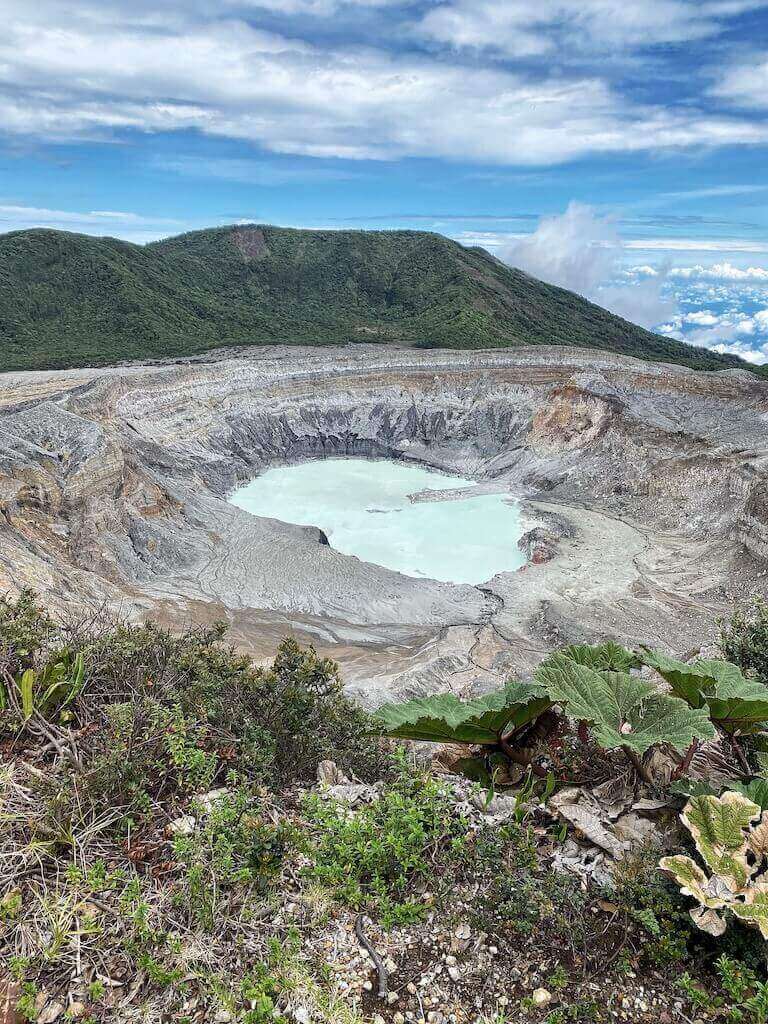
There are three craters at Poas Volcano National Park. The first and most prominent is the crater of Poas Volcano itself. Then there’s Botos Lake, a crater lake. And the third crater is Von Frantzius.
The crater of Poas Volcano (or better, the viewpoint from where you get to see the crater) is easy to get to. It is about 2.4 km (1.5 miles) from the main parking area. It takes about 20-30 minutes to walk, and the trail is wheelchair accessible.
There’s a large viewing platform at the end of the main trail to the crater, where you can peer down into the crater and the lagoon on a clear day. The crater lake is over one mile long and 900 meters (2,952 feet) deep.

It can get very foggy and cloudy near the top of the volcano. Even if the weather forecasts predict the sun, it’ll likely start drizzling, and low clouds will roll in eventually. Unfortunately, when there’s a lot of fog, you won’t be able to see much of the crater or geysers at all.
If it is cloudy and unclear when you arrive at the viewing platform, try walking one of the other trails down to Botos Lagoon and enjoy the beautiful nature for a bit. Sometimes, it clears up pretty quickly, so you might be able to get a sunny window for a bit.
If it’s sunny when you get to the crater, soak it in immediately before the clouds roll in.
We were super lucky when we visited. Even though it was during the rainy season, we had dry weather and clear views during our visit. The weather though can vary a lot from day to day – the guide told us that they day before they really didn’t get to see the main crater at all!

Main trails to Poas Volcano
Two main trails pass by the Poas Volcano crater. The first is the Poas Volcano Crater Trail. This trail goes from the parking lot directly to the viewing platform. It’s an easy trail and takes about 30 minutes.
The second is the Botos Lagoon Trail, which is a little more challenging. It’s about 3.5 km (2.2 miles) and takes about an hour to walk. The trail loops from the parking lot, past the Poas Volcano viewing platform, down near Botos Lagoon, and back to the parking lot.
Botos Lagoon is an inactive crater and a beautiful part of Poas Volcano National Park. If you can add on this little hike, it’s worth it – keep in mind that guided tours won’t take you there though.
The trails to the crater viewing platform are well-maintained and flat the entire way. It’s even wheelchair accessible, making it the perfect day trip for those who aren’t able to go hiking around Costa Rica’s other volcanoes. However, keep in mind that once you get to the viewing platform there are steps to reach the highest points.

How To Get To Poas Volcano From San José
By car
Renting a car in Costa Rica and driving yourself is the most fun way to get to Poas Volcano from San Jose. The drive takes about an hour and a half (though much of this depends on traffic) is beautiful from start to finish. You don’t even need a 4X4 for this one, either!
Driving in Costa Rica can be intimidating, but much of the road is well-maintained. Toward the end, the road gets windy and narrow once you near the volcano park entrance. So, just make sure to drive slowly and with care.
From San Jose, you’ll take the General Cañas Highway to Alajuela (you can also stay in this small town while in Costa Rica). From Alajuela, you’ll take Route 712 and follow the signs to Poas Volcano.
Make sure to read my post, What Is Driving in Costa Rica Like? before renting a car and starting your adventure.

By bus
The bus from San Jose to Poas Volcano National Park might be the cheapest option, but it’s not the most convenient. The bus takes much longer and limits your time to explore the park. Considering Poas Volcano is one of the most popular and best things to do in Costa Rica, you don’t want to limit yourself.
There’s no direct bus from San Jose to Poas Volcano National Park. So, you’d have to first take a bus from San Jose to Alajuela and then another bus in Alajuela to the bus terminal to Parque Nacional Volcán Poás.
The bus takes about two hours each way, and it won’t give you as much time to explore the park.

By guided tour
Another easy way to get from San José, Costa Rica, to Poas Volcano National Park is with a guided tour. That’s what my sister and I did as we didn’t want to rent a car for this part of the trip.
One of the best things about a guided tour is there’s much less of a headache. They usually provide tickets, round-trip transportation, a local guide who will walk with you and explain the history, flora and fauna and intricacies of the park, and small comforts like drinks and snacks.
Different tours might stop at Poas Volcano National Park and a few different places. If you’re short on time and don’t want to set aside a whole day or half-day just for Poas Volcano, you can opt for a combination tour that’ll take you to several other tourist attractions in Central Costa Rica.
If you decide to go with a guided tour, I recommend this From San José: Poas Volcano and Coffee Farm tour. The tour sets aside several hours for Poas Volcano National Park, and the cost includes entrance. It will go down closer to Laguna Botos if that trail is open. Afterward, you’ll head to a coffee farm to taste some delicious locally-made coffee. Depending on the group’s request, the guide may stop at a local spot for lunch. We did this tour and loved it. We had a great tour guide, and everything was very organized.
Practical Guide
Poas Volcano National Park opening hours
The park is open daily from 8:00 am to 4:00 pm, including holidays. The park closes now and then due to increased gas emissions from the volcano or other safety concerns. So, make sure you check the closures before departing for the volcano.
You’ll want to spend at least two hours exploring the park. You only need a few minutes at the viewing point (they tend to usher people along because there are a lot of people waiting for a good view, and you don’t want to be near the gas emissions for too long), but you might want more time to explore the different trails and natural beauty.

Tickets
You cannot buy your entry tickets at the national park. You must purchase your tickets on the SINAC website before your visit. They have an English option, so it’s easy to navigate.
Ticket prices are $15 USD for adults and $5 USD for children between 2 and 12 years old (children under 2 years old are free to enter). They only allow a certain number of visitors per day, so buying your tickets in advance and ensuring you have your entry is important.
When we visited, we saw cars having to make a U turn as they had not bought tickets in advance and there was no availability for the day.
Here’s a step-by-step guide on how to buy your tickets for Poas Volcano National Park:
- Visit the SINAC website and create an account.
- When you create your account, they email you a temporary password, which you must use to access after creation. Once logged back in, you’ll be prompted to change your password to one of your choosing.
- After you’ve changed your password, click “Buy” on the menu bar. Then click “Online Reservation”. Finally, click “Make a Reservation” under Parque Nacional Volcán Poás.
- You’ll choose the date of arrival and the time of your choice. The times are every 20 minutes. You should plan to arrive just before your time slot and make sure you don’t miss it.
It may seem complicated at first glance, but the process only takes a few moments as long as you know your dates and time preferences.
Make sure to check for closures the day before your trip to make sure it’s open for your planned day.
Best time to visit
The best time to visit Poas National Park is early morning before it starts raining. If possible, you should aim to book the very first time slot of the day. The later it gets, the more likely there will be high cloud coverage and poor visibility of the Poas Volcano crater and Botos lagoon.
The dry season is the best time of year to visit Poas Volcano National Park. The dry season is from December to March when there’s a much higher chance of sunny weather.
Having said so, we visited at the very end of October and were incredibly lucky with good weather and great visibility.

What to wear and bring
One of the most important things to remember when packing for Costa Rica and Poas Volcano is that it’s colder than you may think at high elevations. It’s also usually pretty misty and cloudy on most days.
You should bring a good jacket, preferably a rain jacket if possible. And because of the weather, I’d recommend wearing long pants and something that’ll keep you warm if it’s extra windy and raining.
You’ll also want to wear comfortable, closed-toed shoes to hike around and not be limited in any fashion.
You should bring water, and maybe snacks if you need them. There’s a small cafeteria and (extremely expensive) gift shop in the Poas Volcano National Park, so you can always stop by there if you need to buy something small.
Make sure to read my post, The Best Costa Rica Packing List, for more information when preparing and packing for your trip to Costa Rica and Poas Volcano National Park.

Poas National Park facilities
The only bathrooms are located near the entrance to the office. Keep this in mind before you begin hiking and exploring. The bathrooms are pretty standard. I always travel with a small packet of tissues and hand sanitizer, just in case – but the toilets here have toilet paper and there’s soap to wash your hands.
Near the bathroom, there’s a gift shop and cafeteria where you can get souvenirs, drinks, and snacks.
Wildlife and animals in the park
The volcano and three craters are the highlights of Poas Volcano National Park. However, you might spot some incredible wildlife and plants along the way. We saw a sloth on the way to the national park, for example!
The park is a sprawling 5,599 hectares of land with four different habitats (a cloud forest, land with no vegetation, a stunted forest, and an area of arrayans).
It’s an excellent place for birdwatching, as there are over 70 species of birds, including quetzals and toucans. There are also a few small mammals like bats, marmots, and weasels.
Pin It For Later!