

Are you visiting Borneo soon? I am sure you will love it. My sister and I visited East Sabah in Malaysian Borneo last November. It was part of a longer trip around Malaysia that took us to George Town in Penang, Kuala Lumpur, and Malacca.
Spread across three countries (Malaysia, Indonesia, and Brunei), the island is vast, wild, and shaped more by rainforest and rivers than roads.
Most people visiting Borneo for the first time typically visit Malaysian Borneo, which includes the states of Sabah and Sarawak. This is where you’ll find the best balance of wildlife, national parks, and travel infrastructure. Indonesian Borneo (Kalimantan) and Brunei offer very different experiences and require more time and planning.
Borneo couldn’t be more different from continental Malaysia (and I mean it in a positive way). We had no real expectations, but it was a great experience.
There were walks in the jungle and boat rides along rivers to see wildlife. We got to snorkel, had mud baths, and fought the tremendous heat (and the aggressive mosquitoes) typical of this part of the world.
If you are traveling to Borneo soon, it’s best to go prepared. So I am sharing my best tips for visiting Borneo, and the most important things you need to know before you visit.

Quick Overview on Visiting Borneo
Here’s a quick summary of the things you need to know before you travel to Borneo:
- Borneo is best for rainforest, wildlife, and adventure, not beaches or cities.
- Most first-time visitors go to Malaysian Borneo (Sabah or Sarawak).
- Travel is slow and logistics-heavy — distances are long and public transport is limited.
- Wildlife sightings are never guaranteed, but guided river safaris and reserves give the best chances.
- Borneo is generally safe for travellers, including solo women, but health risks (mosquitoes, humidity) matter more than crime.
- You’ll get the most out of Borneo with at least 7–10 days.
- It’s an incredible destination if you’re flexible, outdoorsy, and comfortable with basic conditions.

Choose Your Borneo
Borneo is a huge island, and the experience changes a lot depending on where you go. Here’s how to pick the right area for your trip:
- First-time visitors: Sabah (Malaysian Borneo) — easiest logistics, best mix of wildlife, rainforest, and coastal access.
- Wildlife spotting (orangutans, proboscis monkeys): Kinabatangan River area (Sabah) — river safaris give the highest chance of sightings.
- Rainforest trekking & remote nature: Danum Valley or Tabin Wildlife Reserve (Sabah) — mostly accessible with guided stays
- Caves and cultural experiences: Sarawak — especially around Gunung Mulu National Park and Kuching.
- Independent travel with a city base: Kota Kinabalu — best transport hub and easiest place to organise trips.
- Off-the-beaten-path adventure: Kalimantan (Indonesian Borneo) — far less visited, but requires more planning and time.
Good to know: If you’re visiting Borneo for the first time, Sabah offers the best balance of access, wildlife, and infrastructure.

Things To Know Before Visiting Borneo
Is Borneo worth visiting?
The first question you’ll likely ask yourself before visiting Borneo is whether it is worth visiting. I know my sister and I had doubts as we heard mixed things. Some people we talked to were enthusiastic. Others warned us that nature in Borneo was somewhat compromised by the palm oil plantations, so we’d need to lower our expectations.
We decided to go anyway, and honestly loved it.
So – yes. Borneo is absolutely worth visiting if you’re interested in nature, wildlife, and travel that feels off the usual track.
The island is one of the world’s biodiversity hotspots. In Malaysian Borneo, places like Sabah and Sarawak offer rare chances to see wild orangutans, pygmy elephants, and ancient rainforest. The Kinabatangan River is a fantastic wildlife destination. Mount Kinabalu is a challenge for many hikers around the world.
But visiting Borneo means more than seeing nature. It offers a mix of Indigenous cultures, floating villages, and traditional longhouses. Infrastructure can be basic in rural areas, but that’s part of the appeal. We spent time in a homestay when we visited, but we also got to stay at lovely lodges in the rainforest.
All in all, Borneo is a great destination for travelers looking for something less polished but deeply rewarding. Personally, it’s one of my favorite Southeast Asian destinations.

What country is Borneo in?
Borneo isn’t part of just one country. It’s the third-largest island in the world and is divided among three nations.
The largest portion belongs to Indonesia. That’s Kalimantan, and it covers about 70% of the island. The northern region is split between Malaysia and the small sovereign state of Brunei. Malaysia’s share includes the states of Sabah and Sarawak, both located along the northern coast.
When people refer to “Borneo,” they really could be talking about any of these three countries. To be clear, I must say, my sister and I visited East Sabah, which is part of Malaysian Borneo.
Indonesian Borneo is significantly more rural, and the tourist infrastructure there is very basic.
Each part of Borneo has its own language, government, and infrastructure, though the island as a whole shares similar geography. Picture dense rainforests, diverse wildlife, and rich indigenous cultures.

How long do you need to visit Borneo?
Borneo isn’t a place you can rush. Distances are long, transport is slow, and most highlights involve nature-based activities that take time. How long you spend in Borneo depends on what you want to see, but there is a minimum where the trip starts to make sense.
| Time available | What you can realistically do |
|---|---|
| 3–4 days | Too short. You’ll mostly deal with flights and transfers, with very limited time in nature |
| 5 days | One base only (usually Kota Kinabalu), plus one short wildlife or island trip |
| 7–10 days | Ideal first visit: Sabah highlights, including rainforest, river safari, and some downtime |
| 10–14 days | Sabah plus Sarawak, or a deeper exploration of remote reserves |
| 2+ weeks | Slow travel, multiple regions, or combining Malaysian Borneo with Kalimantan |

Borneo is a great wildlife destination
If you are thinking of visiting Borneo for its wildlife, you’ll be in for a treat!
Borneo is one of the world’s top wildlife destinations, especially for travelers drawn to rainforests and rare species. Its dense jungles are home to animals found nowhere else. Here you can spot the Borneo Big 5, species that only belong here and nowhere else in the world. These include:
- Bornean Orangutan
- Proboscis monkey
- Pygmy elephant
- Rhinoceros hornbill
- Estuarine crocodile
On a regular trip to Borneo, you will also spot lots of birds, including hornbills and kingfishers. Lucky ones may even see clouded leopards.
Malaysian Borneo—particularly Sabah—is popular for wildlife tourism. We went on a river safari on the Kinabatangan River and trekked to the jungle to find rare species.
My sister and I also visited the Sepilok Orangutan Rehabilitation Centre to admire rescued orangutans being prepared for release. Right next door, we also visited the Bornean Sun Bear Conservation Center, which works on the conservation of sun bears.
We were super lucky when we visited and got to see lots – including orangutans in the wild, and gorgeous pygmy elephants along the river. However, one thing I need to make clear is that there is no guarantee of seeing wildlife in Borneo. There are high chances, of course, but you’re in a real forest, and animals just show up when they want.

Macaques can be a nuisance
Who doesn’t love monkeys? We certainly do. However, macaques can be a nuisance in Borneo, and we got to experience that. You should never feed them, no matter how much you want to photograph them (and trust me, they are all over the place and easy to photograph anyway).
Macaques are especially a nuisance in areas where they’re used to humans. Long-tailed macaques are common near lodges, parks, and villages, and they’re smart enough to raid bins, steal food, or snatch items from people.
In some places, they’ve learned that tourists mean snacks. That’s because many tourists feed them to photograph them, and refuse to understand that they are wild animals and not pets.
At one of the lodges we stayed at, every breakfast was a fight between guests and macaques who literally tried to steal food from the plates. Staff had to intervene on a regular basis to shoo them away.
My tip is to avoid carrying food in the open in areas where there are macaques, and to admire them from a respectful distance.

How to get to Borneo
The best way to get to Borneo is by plane, and there are regular connections to South East Asia. Ferries, on the other hand, are very limited.
When we visited, we flew to Kota Kinabalu in Sabah, Malaysian Borneo. This, together with Kuching (in Sarawak), is the main entry point. Both airports have frequent flights with regular as well as budget airlines from Kuala Lumpur and Singapore.
If you are looking to visit Indonesian Borneo, you have the option of flying to Balikpapan, Pontianak, and Samarinda from Jakarta or Bali.
There are also flights to Brunei from Singapore and Kuala Lumpur.
How to get around Borneo
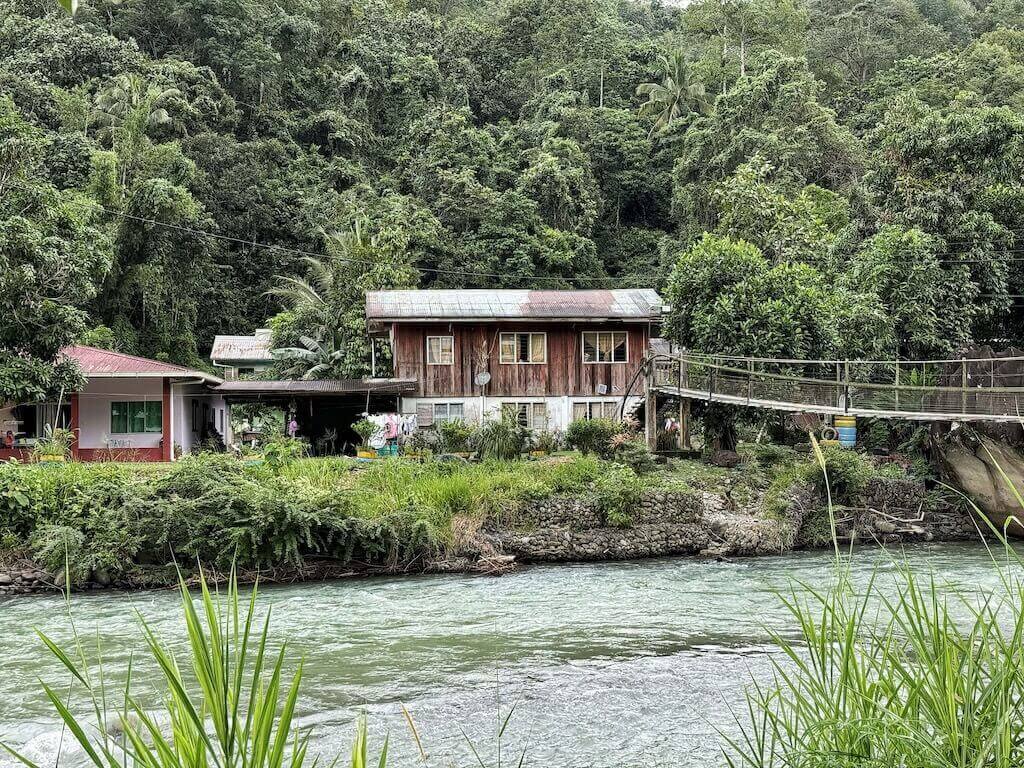
Getting around Borneo depends a lot on where you are and how far you’re going. We visited Malaysian Borneo (Sabah and Sarawak), and mostly traveled by private minivan and once flew from Sandakan to Kota Kinabalu.
Long distances between main cities are best covered by domestic flight—distances are long, roads can be slow, and traveling can be uncomfortable. For local travel, buses connect most towns, though you shouldn’t count on many buses.
To reach more remote areas, you’ll often need a combination of 4×4 vehicles and boats. Guided tours usually include transport, which is helpful in less accessible regions.
I haven’t personally visited Indonesian Borneo (Kalimantan); information here is based on official tourism sources and traveller reports, which suggest that the infrastructure there is more basic. Flights between cities are common, but inland travel often relies on riverboats and rough roads.
Car rental is available in Borneo (at least in Malaysian Borneo). Keep in mind that some roads can be quite rural, so you need to be a rather confident driver.
I recommend using Discover Car to book your car rental in Borneo. It’s my favorite comparison site, and I have used it widely in many places in the world.

When is the best time to visit Borneo?
The best time to visit Borneo is during the dry season, from March to October. This is when you’ll have the most reliable weather, especially between May and August, when rainfall is lowest, and wildlife sightings are easier. It’s also the best time to visit for jungle treks, river safaris, and diving.
Humidity is still high no matter when you visit. Also, keep in mind that showers can happen even in the dry season. On the other hand, trails are more accessible, and boat trips are less likely to be disrupted. Orangutan spotting, especially around Sepilok and the Kinabatangan River, is also better in drier months.
The wet season, from November to February, brings heavier rains. This can make travel more difficult, especially in rural areas.
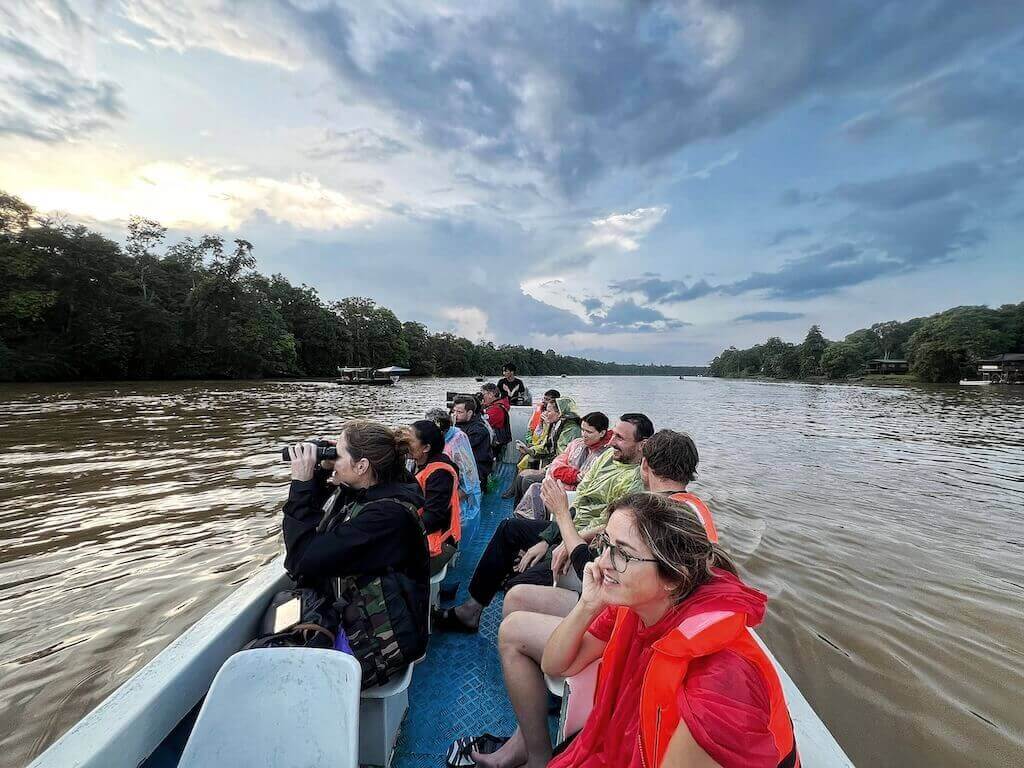
My sister and I visited in November, and we honestly enjoyed it. We got to experience heavy rain twice. Once, we were on a river safari, and the thunderstorm was so persistent that we had to rush back to the lodge. However, we also got to see a lot of wildlife.
All in all, I’d say that Borneo is a year-round destination if you are flexible. Fewer tourists visit in the wet months. This means it’s cheaper and quieter.

Is visiting Borneo expensive?
We didn’t find visiting Borneo to be particularly expensive, but of course, this depends on your style of traveling. I should point out that we traveled in shoulder season and opted for a home stay, mid-range hotels, and lodges, and found we had good deals throughout the trip. We also explored just East Sabah to minimize long-distance travel.
In general, local food, public transport, and basic accommodation are budget-friendly, especially in towns and cities like Kuching, Kota Kinabalu, or Sandakan. Street food and local guesthouses are even cheaper.
What tends to raise the price are wildlife experiences and remote lodges. Visiting places like the Kinabatangan River, or staying in eco-lodges often requires guided tours, private transfers, and park fees. If you ask me, I believe these are worth the cost, but it goes without saying that you’ll have to increase your budget.
Domestic flights are sometimes necessary due to long distances, but they turn out to be quite budget-friendly if you book in advance.

Is visiting Borneo safe?
Yes, visiting Borneo is generally safe. Malaysian Borneo—especially Sabah and Sarawak—is well set up for tourism, there’s good infrastructure and a low rate of violent crime. Most visits are trouble-free, and locals are friendly and helpful.
Petty theft is rare, but it can happen in busier towns, so it’s smart to keep an eye on your valuables, especially in markets or on public transport.
Nature-related risks are actually more relevant than crime in Borneo. Roads can be rough in rural areas, and jungle treks may involve wildlife, leeches, or sudden weather changes (I already told you we had to rush back to the lodge during a boat safari because of a thunderstorm).
There’s also the risk that comes with mosquitoes (more about this in a bit), venomous snakes such as pit vipers (but these are generally shy and the chances of seeing one are very low), and the terrible humid heat that can be really exhausting.
One thing I need to report is that the region of eastern Sabah, near the Sulu Sea and on the border with southern Philippines, had a few safety issues in the past that included kidnappings of tourists by paramilitary groups. This was an occurrence in the early 2000s, but no major incidents have been registered since 2016.
The Malaysian Government has worked hard to increase security. There’s a strong military presence, maritime patrols, and tight border controls.
Some countries (i.e., the UK or Australia) still advise against traveling to East Sabah, but honestly, when we visited, we encountered no issues at all. If you are concerned about safety (which you shouldn’t be) but still want to visit, you may want to consider joining a guided tour. Guides will generally know how to keep you safe.
I recommend getting good travel insurance for your trip to Borneo. My go-to company for insurance is HeyMondo. I have been using them for all my trips in the last few years, and I have never had an issue with them.
Is visiting Borneo safe for female travelers?
Borneo is generally safe for solo female travelers. This is especially the case for Malaysian Borneo (Sabah and Sarawak), where tourism is well established, and locals are welcoming and helpful (most of them speak good English).
I traveled with my sister, and I was always comfortable walking around during the day, and we only used basic precautions—like avoiding isolated areas at night, or flashing our belongings.
Taxis and public transport are also safe. But it’s a good idea to arrange transportation beforehand whenever you can. I recommend using Grab, which is the Southeast Asia version of Uber.
I also recommend dressing modestly, especially in villages or less touristy areas.

Mosquitoes are a real nuisance
There are lots of mosquitoes in Borneo. In fact, I don’t think I have ever seen and experienced that many in any other place I have visited.
Mosquitoes are common, especially in jungle areas, wetlands, and even more during the rainy season. I need to underline here that not every mosquito carries disease, but some may transmit dengue (which is common even in cities) and, in more rural areas, even malaria.
Other than carrying diseases, mosquito bites can be persistent and terribly uncomfortable. The only way to protect yourself is by wearing long sleeves and pants, using mosquito repellent (DEET), and sleeping under mosquito nets.
When we hiked through the jungle during our trip, I was covered from head to toe (literally, I even wore a hood!). I wore a hiking shirt and hiking pants, and applied repellent on my face, neck, ears, and hands (which I mostly kept in my pockets).
My sister wore leggings, and it soon became clear that these weren’t suitable in the jungle. She was soon covered in bites on her legs (she must have had 50), and ended up applying repellent on top of her clothes. This is to say: not all long-sleeved shirts and pants are suitable for a jungle trek.

Tap water in Borneo is not safe to drink
You can’t drink tap water in Borneo. All hotels, lodges, and guest houses will provide bottled or filtered water, and it’s best you stick to that to avoid getting sick. Make sure to bring your water bottle to refill whenever you need it.
We found filtered and bottled water everywhere we traveled in East Sabah, but to be on the safe side, you may want to bring a water purifier or purification tablets with you.

What to pack for Borneo
I don’t want to go into much detail, but here’s a basic packing list for Borneo:
- Insect repellent with DEET – Natural options aren’t enough for areas with dengue and malaria risk.
- Mosquito net hat – I didn’t have one, but consider getting one for comfort during treks.
- Sun hat – Most river boats have no shade, and sun exposure can be intense.
- Sunscreen – Essential even in the forest, especially on river trips.
- Binoculars – Lodges may rent them, but bring your own for better quality and comfort.
- Poncho or long raincoat – Needed for sudden tropical downpours. Though keep in mind the chances of getting soaked when it pours are high, even when wearing a poncho.
- Sunglasses – Helpful for both boat rides and bright clearings in the forest;
- Hiking boots – Either these, or leech socks;
- Long hiking pants and long-sleeved shirts – Crucial for jungle treks and insect protection;
- Camera and long lenses – For capturing all the incredible Borneo wildlife.

FAQs on Visiting Borneo
Yes — Borneo is worth visiting if you’re interested in rainforest, wildlife, and nature-based travel rather than cities or beaches. It’s home to orangutans, dense jungle, rivers, and national parks that feel genuinely wild.
Travel can be slow, and conditions are hot and humid, and wildlife sightings aren’t guaranteed. But if you have a knack for places that feel far removed from mass tourism, Borneo offers a rewarding and unforgettable experience.
Yes, Borneo is generally safe for tourists. Violent crime is rare, including in Malaysian Borneo. The main risks include illnesses related to the heat and humidity, and mosquito-borne illnesses — so preparation matters more than personal security.
Plan to spend at least 7–10 days in Borneo for a meaningful visit. Shorter trips feel rushed due to long distances and slow transport, while 10–14 days allows time for rainforest, wildlife experiences, and travel between regions.
The best time to visit Borneo is during the drier months from March to October, when trekking and wildlife activities are easier. Rain falls year-round, but heavy monsoon rains are more common between November and February, especially in coastal and lowland areas.
Yes, it’s generally safe to travel to Borneo right now, especially in Malaysian Borneo (Sabah and Sarawak). There are no security issues affecting tourists. Standard precautions apply, with more attention needed for health, weather, and remote-area travel than for personal safety.
Yes, Americans can visit Borneo. US passport holders can enter Malaysian Borneo (Sabah and Sarawak) visa-free for short stays, while Indonesian Borneo (Kalimantan) follows Indonesia’s visa rules. Passport validity and onward travel requirements still apply.
Yes, you can visit Borneo without a tour, especially in Malaysian Borneo, where cities like Kota Kinabalu and Kuching are easy to navigate independently.
However, many of Borneo’s highlights — such as wildlife reserves, river safaris, and remote rainforests — require guided access or are far more practical with a tour.
Independent travel works well for cities, islands, and some national parks, but guided trips are often necessary for deeper jungle experiences and reliable wildlife sightings.
Borneo is moderately priced. Daily costs in cities and small towns are affordable, but wildlife lodges, river safaris, and guided experiences can be expensive. Budget travel is possible, but seeing Borneo’s highlights usually requires paying for tours or permits.
Yes, tourists can drink alcohol in Borneo. Alcohol is legally available in Malaysian Borneo, Indonesian Kalimantan, and Brunei (with restrictions). Availability varies by area, and prices can be higher in remote regions. Beer and cocktails are easily available. Wine is also available in cities and tourist lodges.
Borneo is famous for its rainforests, wildlife, and biodiversity. It’s best known for orangutans, proboscis monkeys, river safaris, vast jungle landscapes, and some of Southeast Asia’s most important national parks and conservation areas.
Borneo has many languages. Malay is the main language in Malaysian Borneo, Indonesian in Kalimantan, and Malay and English in Brunei. English is widely spoken in tourist areas, alongside numerous local Indigenous languages.

Final Considerations on Traveling To Borneo
Borneo is an incredibly rewarding destination, but it’s best to arrive informed and to allow at least some flexibility during your trip.
This is not a destination for ticking off attractions quickly or moving around on a tight schedule. Distances are long, transport can be slow, and many of the island’s highlights — from rainforest reserves to river safaris — require time, planning, or guided access.
Wildlife encounters are never guaranteed, and conditions can be hot, humid, and physically demanding.
That said, visiting Borneo offers rich biodiversity and genuine cultural experiences, and it’s not affected by mass tourism yet.
Malaysian Borneo is accessible and still very much authentic. It truly is an unforgettable destination.
I hope you found my Borneo travel tips useful. If you have more questions, let me know in the comments.
Recommended Readings


Pin It For Later!

Hi! Awesome and very useful read, thank you so much for a concise presentation of what to expect and how to prepare. I have a question though regarding something I am currently a bit worried about but you haven’t mentioned at all- swimming or no swimming at the beaches of Sabah?
Particularly considering crocodiles that seem to be said to be lurking all around? Could you share your experience on that please?
I am traveling to Sabah soon and I was so excited seeing how beautiful beaches are there but upon reading a bit online, seems like I should be worried if I go swimming anywhere except for the hotel pool? Can you comment please? I’m leaving this Sunday…
Hi! We only went swimming in a national park and there was the barrier reef so we knew we were safe. In general, I’d say it’s best to ask locally (that’s what we did).
Did you go independently or on an organised tour? – there’s not much mention of the logistics of booking buses etc, schedules or local transport.
Did you go to Kota Kinabalu NP and is it possible to do day-walks there independently without hiring a guide. We don’t want to go to the summit.
Hello! For the most part we did an organized group tour so we wouldn’t have to arrange transportation, but you can do that locally. We didn’t go to Kota Kinabalu NP and we did not hike Mount Kinabalu but in any case YOU CAN’T go there and hike it in one day, it’s too far. FYI there are guided group tours of East Sabah that also include the hike of Mount Kinabalu, and for ease I’d recommend one of those. Otherwise, the city itself is really nothing special – just a place to land and take off.