

There are so many adventurous things to do in Argentina that it’s almost impossible not to fall in love with this beautiful country, no matter your type of traveler or interests. The endless adventure and beauty are just some of the reasons I have been smitten with Argentina’s natural beauty, culture, and history.
I’ve visited Argentina three times, and I’m sure I’ll be going back again and again throughout my life. One thing I learned about Argentina is that there are so many tourist attractions, and the vast country truly has something for everyone.
You’ll find cities packed with interesting museums, a fantastic cultural life, tango galore, unique wildlife, mountains and glaciers, jungle and waterfalls, infinite possibilities for adventure seekers, friendly people who are always in for fun, incredible food, and delicious wines.
If you are planning your first trip to Argentina, you may be trying to decide what the best things to do in Argentina are for your upcoming trip. Don’t worry! Since I have been many times, I thought I’d share my knowledge with you and have selected the very best for you.

The Best Things To Do In Argentina
Explore the magnificent Buenos Aires
Buenos Aires is among the unmissable places to visit in Argentina. Known as “The Paris of South America,” the Argentine capital is a great (and huge) European-looking city with a fabulous Latin Vibe.
Next to state-of-the-art modern buildings, there are beautiful examples of colonial architecture. You will find many parks and interesting museums. Its boulevards are immense, but just around the corner, there are tiny cobbled alleys.
Plan to spend enough time in Bs. Aires (or Baires, as locals call it) to enjoy the gorgeous little cafés where the porteños (this is what people living in Buenos Aires are called) like to meet; the trendy bars and nightclubs; the milongas where even the most reluctant ones will be seduced by tango.
In this city, modernity and history mix gracefully. BAires, as the locals call it, is incredibly spread out, but with a little bit of effort, most of the tourist attractions can be visited in a day.
Make sure to also read my post The Best Argentina Travel Tips for all the important information you need before traveling to Argentina.

The heart of the city is Plaza de Mayo. This is where the Mothers of Plaza de Mayo used to meet with pictures and signs of the desaparecidos – the victims of the Argentine dictatorship – demanding to know where their sons were being held and reporting the human rights violations committed by the authorities.
That’s where you’ll find the Catedral Metropolitana and the iconic Casa Rosada, the seat of the Argentinian President and the political heart of the city. Not far from it, Manzana de las Luces is another must-see, as it is the oldest colonial church in Buenos Aires.


Microcentro, the city’s commercial center and close to Plaza de Mayo, is another area of Buenos Aires worth exploring. There, you will spot the trendy porteños all dressed up and rushing to business meetings.
Not far from Plaza de Mayo, Puerto Madero is a great place for a walk. It used to be a pier, but it is currently one of the trendiest barrios of the city, with its luxury apartment buildings and trendy restaurants. It is also home to famous architect Calatrava’s Puente de la Mujer.


Another part of Buenos Aires you will definitely like is Recoleta. In the 1870s, when an epidemic of yellow fever hit the neighborhood of San Telmo, the wealthiest families moved to this area.
Go for a walk along Avenida Alvear, with its beautiful villas, lovely shops, and the Cementerio de Recoleta, the cemetery where Evita Peron, one of the most important persons in Argentina’s history, is buried.
You don’t necessarily need a guided tour of Buenos Aires, as it’s so easy to explore on your own. However, you might want one if you’re short on time and want to make the most of your day or simply want more background information about the city and its history. I recommend this wonderful Buenos Aires: City Highlights Guided Tour with Transfer tour.
If you want something a little more action-packed, you can try this North or South Buenos Aires Bike Tour. You’ll bike around the city with a guide, making the day a little more fast-paced and exciting to some. The tour includes the bicycle and equipment, a guide, and transportation.
If you want a tour just to the famous cemetery, I recommend this La Recoleta Cemetary Guided Tour in English. You’ll walk around the cemetery with a guide who’ll tell you stories about it the people and families as you go. This is a really great way to experience the cemetery, as you’ll learn so much more than you would alone.


San Telmo and La Boca are the most charming barrios of Buenos Aires, and a visit is a must. San Telmo used to be an elegant area where the wealthiest families lived, but following the yellow fever epidemic, they moved to Recoleta.
With its cobbled streets and colonial buildings, it is now a favorite of artists and bohémien, famous for its Sunday antiques market and for the lively Feria de San Telmo (the local market).
Italian and Spanish immigrants settled in La Boca in the 19th century, and it is now a popular tourist spot for its colorful Caminito and the Boca Juniors’ impressive football stadium, La Bombonera.
If you want a more immersive experience, I strongly recommend this La Boca Guided Walking Tour in English. On tour, you’ll learn all about the history of the colorful houses “conventions,” the legendary football club Boca Juniors, the history of tango right on the streets, and so much more.
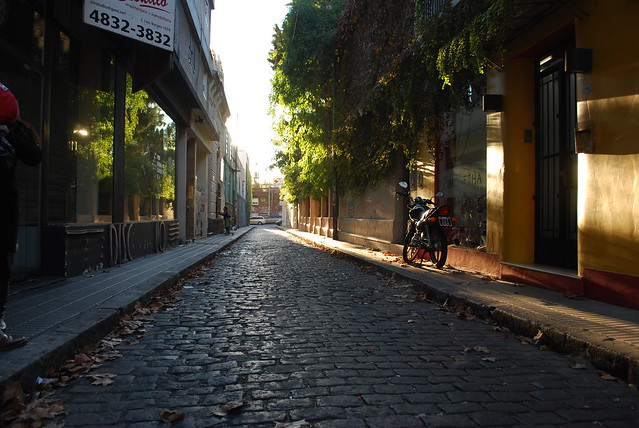
Palermo Viejo is one of the trendiest areas of Buenos Aires, packed with gorgeous buildings, cobbled streets, and beautiful boulevards. You can also explore Palermo Soho and Palermo Hollywood, which are packed with great street art.
If you’re interested in Buenos Aires’s artistic side, I recommend this Palermo: Graffiti and Street Art Guided Tour in English. The tour will take you to some of the most well-known street murals, and you can learn about the political origins of some of the art, and other interesting tidbits.
If the weather in Buenos Aires is not nice, make sure to visit one of the many fantastic museums! My two favorites are the Museo Nacional de Bellas Artes, which has Argentina’s best art collection, including pieces by Renoir, Monet, Picasso, and Gauguin, and the Museum of Modern Art.
Make sure to also read my posts 25 Unmissable Things To Do In Buenos Aires and A Complete Guide To Where To Stay In Buenos Aires for more inspiration for when you visit Buenos Aires.

Watch a fútbol match at La Bombonera
People take fútbol very seriously in Argentina. Diego Armando Maradona is still a national hero, and Lionel Messi is a star. If you are going in the right season, plan to go to La Bombonera for a fútbol match. Try to get tickets for a superclásico – Boca Juniors v. River Plate.
But there are over 30 stadiums in Buenos Aires and even more spread out throughout. the country. You should be able to find a game any week of the year, though obviously, some seasons more than others will be more exciting.
Buenos Aires soccer season is from around January to August, give or take a few weeks. This is the best time to catch some of the legendary teams like Boca Juniors and/or River Plate.
Regardless of your interest in soccer or fútbol, you should definitely try to fit in a football match while in Argentina. The locals are absolutely crazy about the sport, and it’s such an exciting and energetic experience that is 100% unique to this country.
Not sure where to start looking for tickets for a soccer game? I recommend this Football Soccer Match Day Experience, especially if you’re traveling alone. The tour organizes your tickets for you, and you’ll go with a small group and knowledgeable guide who’ll help with security and the logistics of the game. You also have the option to add on a little tour of Stadium Neighborhood and other classic experiences before the game.

Dance tango
Did you know that the tango originated in the streets of 19th-century Argentina?
It’s true, and over the years, tango has morphed into one of the most recognizable forms of dance around the world. So, you should definitely consider setting some time aside to watch professional tango performances or even try it yourself!
Watching a tango in one of the many milongas is a must in Buenos Aires. And if you’re feeling confident, you should try a class or two and see if you are a natural-born dancer.
Many people gather in San Telmo to watch spontaneous tango dancing in the main square on Sundays, but otherwise, you can buy tickets for a café where tango shows are regularly on air.
For one of the most unique tango shows in the country, I recommend this Piazzolla Tango Show with Optional Dinner. The tango show takes place at Galería Güemes, one of the most beautiful theatres in Argentina and one of the must-see attractions in Buenos Aires.
If you’re feeling confident, I recommend this Private Tango Lesson. The 60-minute lesson is perfect for beginners or those who just want to learn a few more moves from a professional dance instructor.

Drink Mate
Mate is a bitter infusion made with chopped yerba mate leaves and hot water.
Drinking mate is a huge part of the Argentinian culture, to the point that people in Argentina hardly leave their homes without carrying a thermos of hot (never boiling!) water, enough yerba mate, a cup (which is usually called calabaza, Spanish for pumpkin, and is indeed a calabash gourd) and a bombilla, the straw used to drink it.
Drinking mate is a national ritual: Buenos Aires parks are packed with people sitting on the grass and drinking mate on Sundays. They pass along the cup and the straw and sip it for hours at end. It is not uncommon to also see mate stations, where people empty their calabaza and fill up on hot water.
Visit El Tigre
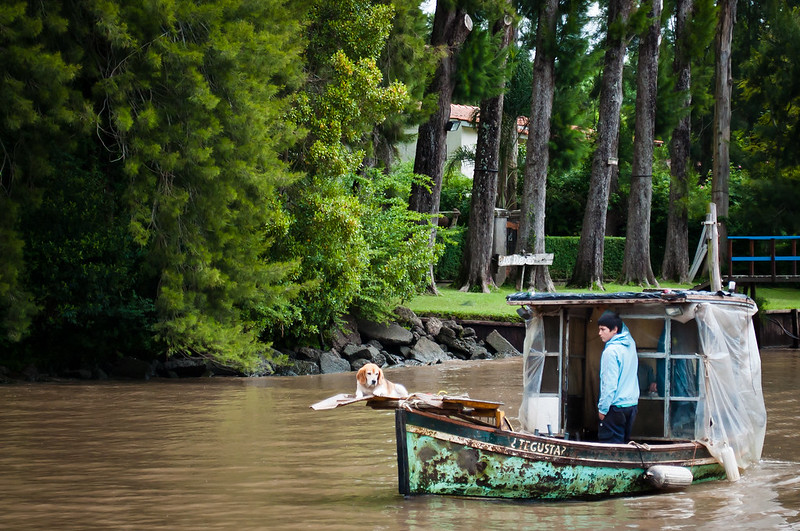
About 35 km (21.7 miles) from north of Buenos Aires, Tigre and its river delta are a favorite of porteños, and they are nice places for a day out of town. A train ride away from Retiro station, Tigre is a small, quiet city where you can get away from the heat of Buenos Aires during summer days.
Make sure to visit the Puerto de Frutos, a lovely local market that sells any kind of goods. You can also go on a boat ride that takes you along the delta: the view of the traditional homes and nature are stunning.
For a day trip to El Tigre, I recommend this Buenos Aires: Tigre Delta Boat and Van with Snacks. It’s a full-day tour with transportation, snacks, drinks, and other activities included. You’ll ride a boat down Rio de la Plata to Tigre, learn about the Tigre Delta with a guide, and visit a historic market in Tigre’s center.
Check out my post 14 Fantastic Day Trips From Buenos Aires because El Tigre is an amazing day trips from Buenos Aires, but there are many more!

Go on a day trip to Colonia del Sacramento (Uruguay)
Colonia del Sacramento is among the places to visit in Uruguay, and only one hour away from Buenos Aires by ferry. It is a lovely escape for a day trip from Buenos Aires. You can catch a fast boat across the Rio de la Plata to visit the gorgeous little city, which was founded by the Portuguese in 1680.
The main attraction of Colonia del Sacramento is the Barrio Histórico, a UNESCO World Heritage Site, with its old gate, the Portón de Campo; the tiny Calle de los Suspiros; the beautifully kept colonial buildings; Plaza Mayor 25 de Mayo and Plaza de Armas; and the ruins of the Convento de San Francesco.
The lighthouse is the perfect spot to admire the views of the Rio de la Plata. Colonia is also packed with perfectly kept vintage cars.
Make sure to read my posts: 15 Great Things To Do In Colonia Del Sacramento Uruguay, The Best Things To Do In Uruguay, and 25 Cool Things To Do In Montevideo for more ideas on places to visit in Argentina’s fun neighbor.

Admire wildlife in northern Patagonia Argentina
Patagonia technically covers almost half of Argentina (and also half of Chile), with less than 5% of the country’s population. It’s a very natural place, with incredible mountains and views. Since it’s so big, there are also many popular towns and regions for backpackers and travelers.
Puerto Madryn (a city often referred to as Madryn), Peninsula Valdes, and Punta Tombo are all popular starting points for northern Patagonia. This region has so much exciting wildlife that you won’t be disappointed.
Puerto Madryn is a small port town on the Gulfo Nuevo, with season whales right off the coast, sea lions, elephant seals, penguins, and a lot more unique creatures passing by.
It’s actually one of the only places in the world where you can swim with wild sea lions in their natural habitat.
It is also a beach destination in the summer months (though don’t expect Caribbean-style beaches!), and throughout the year, it’s a great base from which to explore the region and admire wildlife.
Go there in the winter and spring, between June and December, to admire the Australian whales directly from the town jetty (although apparently the best place to spot them is Puerto Pirámides, in the Península Valdés).
If you want a better chance to spot whales and other marine life, you should consider a boat tour. I recommend this The Best of Peninsula Valdéz in One Day tour. The tour includes pickup in Puerto Madryn and other surrounding areas, as well as a whale-watching boat trip if it’s in season.


Visit during the summer months (between December and March) to admire penguins and go on a boat tour to spot other marine life, such as dolphins and sea lions. Puerto Madryn is also perfect for hiking, biking, kayaking, scuba diving, or even learning how to windsurf.
I recommend this Puerto Madryn: 3-Hour Snorkeling Trip with Sea Lions. You’ll go to Punta Loma Nature Reserve and can swim with sea lions. You might also spot dolphins, whales, penguins, and other wildlife. The tour includes transportation and the boat trip the nature reserve, equipment, and multi-language guides.
The Reserva Faunistica Peninsula Valdés is a UNESCO World Heritage Site. This is one of the best places to observe incredible wildlife in its natural habitat. During a tour of Peninsula Valdes, you can admire sea elephants and lions, guanacos, nandus, foxes, and Magellan penguins. Depending on the season, even orcas show up.
Punta Tombo is the largest penguin nesting region in South America. In addition to a variety of birds, including cormorants and seagulls, there is a colony of over half a million Magellan penguins, which set up their nests and lay their eggs each year between September and April.
For a guided tour to Punta Tombo, I recommend this Shore Excursion Punta Tombo – Puerto Madryn Patagonia. The tour is designed for cruise ship passengers, so the pick-up is right at Luis Piedra Buena Pier in Madryn, but you can still join along if you aren’t coming from a cruise ship. From the pier, you’ll head to Punta Tombo, where you’ll learn all about penguins and other wildlife.
Finally, Puerto Madryn also has several interesting museums. One of them, the Ecocentro, is a work of art of interactive exhibits where great artistic sensibility and outstanding scientific research are joined together for superb results. It also has a fantastic library with a beautiful view of the gulf.
Head over to my post A Complete Guide To Puerto Madryn, Argentina to read about everything you need to know about Puerto Madryn, including all the best activities, how to get there, and other useful information.

Venture to Ushuaia
To appreciate the country’s Argentina unspoiled nature and appreciate its wilderness, Ushuaia is one of the places to visit in Argentina.
Located in a wide bay on the southern coast of Isla Grande de Tierra del Fuego, with the Martial mountain range at its north and the Beagle Channel at its south, this is a prime destination for admiring wildlife and hiking in the summer months.
During the summer, the city (which is the closest point to Antarctica) gets a lot of daylight, and the temperatures, despite being cold, are not as prohibitive as in the winter months (May to August), when skiing is the reason to visit.
Spend at least five days in Ushuaia to take in all it has to offer, including hiking, kayaking, dog sledding, wildlife watching, and Antarctica cruises. Use it as a base to hike Cerro Martial and its glacier and explore Parque Nacional Tierra del Fuego, the Strait of Magellan, and the Beagle Channel.
Read my post The Best Things To Do In Ushuaia so you don’t miss any of the best activities!


Hike to Laguna Esmeralda
Hiking is one of the top things to do in Argentina, and there are hardly better places for that than the scented forests of Tierra del Fuego. The hike to Laguna Esmeralda is definitely one of the most rewarding in Tierra del Fuego.
It’s a fairly easy 8 km (about 5 miles) (there and back) hike through the forest and a large peat moss that will take you to a beautiful emerald lake with mountains and glaciers at its back.
The trail is easy to find – there is transportation from Ushuaia and back – and to follow, but if you prefer, you can join a guided tour.
For a guided hike to Laguna Esmeralda, I recommend this Esmeralda Lagoon Trekking from Ushuaia. The tour includes round-trip transportation, four hours of trekking through Nunatak Refuge in Tierra del Fuego, lunch, and a knowledgeable guide.
Check out my post A Complete Guide To Hiking Laguna Esmeralda for all the hiking information and what to expect.

Explore Tierra del Fuego National Park
The Tren del Fin del Mundo offers a scenic train ride through Tierra del Fuego National Park, one of the country’s most impressive national parks.
It’s definitely the most popular tourist attraction in the region, but you can get away from day-trippers by following one of the many hiking trails. Some offer views of the Beagle Channel and of Isla Navarino and Isla Hoste.
It’s also a great place to visit to spot local wildlife, including cormorants, seagulls, rabbits, the non-endemic North American beaver, and even condors.
Make sure to head to Lapataia Bay and walk to the Mirador Lapataia for impressive views. Also, check out Acigami Lake and the Southernmost Post Office.
I recommend this Tierra del Fuego and the End of the World Train from Ushuaia activity for those looking for a guided experience and ride on the famous train. You’ll also stop at many scenic spots, including Acigami Lake and Lapataia Bay, making it an all-around comprehensive tour.
This Ushuaia: Tierra del Fuego National Park Tour with Lunch is another epic adventure that includes plenty of time for short walks and hikes around the national park. Another bonus about this specific tour is that while they visit some must-see spots, like Lapataia Bay, it also prioritizes scenic viewpoints further away from tourist-dense locations, so you get a unique perspective away from overly crowded areas.
If you want to ride the Fin del Mundo train to the National Park during high season, you should book the End of the World Train Ticket in advance.
Check out my post 15 Amazing National Parks In Argentina for more places to visit in Argentina that you should not miss!

Go on a cruise on the Beagle Channel
Boarding a day cruise across the Beagle Channel is a great way to explore the various islands of Tierra del Fuego, such as those of the Alicia Archipelago.
Bird Islands, Seal Islands, and Isla Martillo (Penguin Island) are packed with wildlife. Here, you can admire colonies of sea lions, seals, and Magellan Penguins. Catamaran Cruises around the island may have different itineraries, so make sure you choose wisely.
For example, one tour might stop at Martillo Island to observe the penguins, while another might stop elsewhere for an educational hike. However, most boat tours around Beagle Channel are a great overall experience.
Most tours of the Beagle Channel will include a stop by the beautiful Les Eclaireurs Lighthouse. This lighthouse, also called The Illuminators Lighthouse or the Lighthouse at the End of the World, is one of the most gorgeous viewpoints because of the dramatic backdrops and surrounding scenery.
I highly recommend this Beagle Channel & Sea Wolves Island Catamaran Cruise tour from Ushuaia. The catamaran cruise heads to Beagle Channel via Paso Chico. You’ll go to Sea Lion Island in the Bridges Archipelago, Bird Island, go to Les Eclaireurs (the Illuminators) Lighthouse, and Puerto Karelo for a short 20-minute hike with a guide.
I also recommend this Ushuaia: Penguin Watching Tour by Catamaran tour for those who want more emphasis on the intriguing penguins of the region. The tour visits Sea Lion Island, Bird Island, Les Eclaireurs Lighthouse, and Martillo Island to observe the penguin colony.

Visit El Calafate
Patagonia is one of the best places to visit in Argentina, and the small town of El Calafate is the perfect base to explore it.
Located on the southern coast of Lago Argentino, surrounded by Andean peaks, lakes, and glaciers, this small town is pretty and a lovely place to relax for a few days, as it is packed with nice cafés, restaurants, and shops.
Those cafés are really handy during sudden weather changes. Even in the summer months, El Calafate can be really cold, and it can snow!
Some of the most popular activities around El Calafate include glacier tours, nature hikes through Torres del Paine, and breathtaking glacier lagoons. But honestly, you could easily spend a few days enjoying the quintessential town of El Calafate all on its own.
If you’re looking for something to do in El Calafate, I highly recommend this El Calafate: Panoramic Tour with Punta Walichu tour. The tour takes you to Punta Walichu, an archeological site near El Calafate town. You’ll learn a lot about the people who first inhabited this area, the local flora and fauna, and the beautiful Mother Nature.
Read my post, A Complete Guide To El Calafate, Argentina, for more information on Patagonia. Also, check out my post, 30 Things You Should Consider Before Traveling To Patagonia so you can arrive perfectly prepared!

Admire Perito Moreno Glacier
If you’re around El Calafate, you have to make sure to visit Puerto Moreno Glacier.
Perito Moreno Glacier is – quite simply – impressive. From a distance, the view is that of an enormous river of ice that slowly moves towards the lake, surrounded by mountains. Getting closer, it looks like a wall of ice.
Go on a cruise on the Lake Argentino, along the Canal de los Témpanos, to get right to the bottom of Perito Moreno and to admire the icebergs that float on the lake.
Make sure to listen to Perito Moreo, too. As the ridges tear away from the glacier, they crash loudly onto the lake, producing a sound similar to thunder in the distance.
For a Perito Moreno Glacier tour with an optional boat ride, I recommend this El Calafate: Perito Moreno Glacier & Option Boat Cruise tour option. The tour takes you right to Perito Moreno Glacier in Los Glaciers National Park, where you’ll have plenty of time to stroll along the boardwalks for various views and angles of the glacier. You can also opt for a boat ride that takes you even closer to the glacier.
Check out my post A Complete Guide To Perito Moreno Glacier to learn all about the exciting excursion and the best way to go about it.


Go on a glacier hike
If you haven’t guessed, El Calafate is one of the best places in Argentina for an incredible glacier hike. And Perito Moreno’s glacier hike was one of my favorite things to do in Argentina.
Believe it or not, it’s not so cold when you do it, either—I found the temperatures much colder on the balconies. So, if you want to visit Perito Moreno anyway, consider doing a trek instead because it will keep you warm and give you a memorable experience overall.
During the hike, which lasts roughly one hour, you will see the glacier’s cracks and crannies, try its water, and even sip whiskey on the rocks coming from the glacier itself.
You will need to wear proper gear for the hike – good hiking boots and socks, a good snow jacket, hat, scarf and gloves and thermal underwear will all be necessary.
I recommend this El Calafate: Perito Moreno Glacier Trekking Tour and Cruise if you want a trekking adventure around the glacier. The tour includes round-trip transportation, a one-hour trek to the glacier, a cruise through the national park, and a guide from start to finish.

Visit an Estancia
Estancias are ranches found throughout Argentina, Chile, Paraguay, and Uruguay.
I think the best ones are in Patagonia, either close to El Calafate or Ushuaia. You should visit them to learn more about the traditional way of life in these regions. They offer an authentic glimpse into the region’s rich cultural heritage, surrounded by breathtakingly beautiful landscapes, as well.
Estancia Rolito – near Ushuaia
If you find yourself in Tierra del Fuego, you can head to Estancia Rolito, one of the very few working estancias – most in the region are now tourist attractions for the most part.
It’s actually a bit out of the way, so you will need a guided tour to visit. However, if you manage to make it to Estancia Rolito, you won’t be disappointed.
Estancia Rolito can be visited as part of the Tierra Turismo tour to Cabo San Pablo from Ushuaia.
Estancia Haberton – near Ushuaia
Estancia Haberton is another great, well-known estancia. It’s actually one of the most popular attractions near Ushuaia. It’s an extensive ranch where you can engage in a number of activities that help you learn and experience this rich side of Argentinian culture.
Most Beagle Channel tours to the different islands include a stop at Estancia Haberton, so that’s definitely the easiest way to visit the historic ranch from Ushuaia.
For an exciting tour that includes a stop at Estancia Haberton, I recommend this Beagle Channel to Martillo Island and Walk Among Penguins activity from Ushuaia. Penguins are on the island most days, so you’ll spend an hour at the ranch and explore nearby paths around the island, possibly alongside them.
Estancia Cristina – near El Calafate
If you are in El Calafate, consider a day trip to Estancia Cristina. While most visit to just get an idea of life at the ranch, which has a small museum, this is a great starting point for hiking all the way to a viewpoint of Uppsala glacier. It may be very windy, yet the hike isn’t too strenuous.
During the hike, you will walk along the Cañadón de los Fósiles, where you will be able to observe a large number of marine fossils dating back to an era precedent to the formation of the Andes and see other glaciers from the great viewpoint of Lago Guillermo.
Finally, you also get to visit Estancia Cristina, which was once a ranch and it has currently been turned into a fabulous boutique hotel where it is great to spend a few nights.
I recommend this El Calafate: Estancia Cristina & Cascada de los Perros Tour. On tour, you’ll sail among the icebergs on Lago Argentino (Argentina Lake) to Upsala Glacier, take a small boat for up-close views, and have several hours to hike and learn more at Estancia Cristina.
I also recommend this incredible, action-packed Cañadón de los Fósiles Expedition for an exciting adventure around Cañadón de los Fósiles in Los Glacieres National Park. The tour includes exploration by boat, 4WD, trekking, and so much more. It’s also a small group size, so you can go about at a comfortable pace.

Go to Torres del Paine
Lots of people in El Calafate feel tempted to go on a day trip to Torres del Paine National Park in Chile. This is a great place to visit, and there is a good reason it is a UNESCO World Heritage Site and has incredible views.
However, I would not recommend going to Torres del Paine just for a day. I speak with good reason, as I was one of those who made the mistake of wasting a full day (and a good amount of money) on what turned out to be just a bus trip, with stops lasting no more than 30 minutes for pictures.
The park is too gorgeous to spend just a few hours there, and it deserves at least a few days to explore the various hiking trails. If you do decide to go, make sure to spend a few days there.
Still want to see Torres del Paine in a day? I recommend this Torres del Paine Full Day Overland Truck 4×4 from El Calafete tour. You have to plan for a lot of time in the 4×4 bus, and a full day of adventuring, but it’s doable if you really can’t set aside more time for Torres del Paine.

Hike Mount Fitz Roy
Adventure sports, such as hiking, rafting, and kayaking, are among the most fun things to do in Argentina. Thanks to the iconic Fitzroy mountain range, El Chalten is considered the Argentinian hiking capital.
Located on the northern side of the Parque Nacional Los Glaciares, this is actually a tiny village. Yet, it is the perfect starting point for many hiking trails and is fairly easy to reach even on a day trip from El Calafate.
Once in El Chalten, you will find many hiking trails. The best is by far the one to the base of Fitz Roy, known as Laguna de los Tres. It’s a long hike (about 24 km—15 km) that is, for the most part, easy, except for the 1 km (0.6 miles) that leads to the actual lagoon, which is a very steep ascent and just as steep descent along the same trail.
The trail to Laguna de Los Tres is very well-marked and easy to follow, and you can hike independently. If you prefer to join a group, several guided treks depart from El Chalten every day.
I recommend this From El Calafate: Full-Day Tour to El Chaltén if you’d like to visit El Chalten with a guided tour. The tour includes roundtrip transportation, lunch, water, and a local guide who’ll lead the way and teach you more about the beautiful region.
Make sure to also read my detailed posts A Guide To Hiking Laguna De Los Tres and An Excellent Guide To El Chalten.
Also, check out my post, Hiking In Patagonia: 16 Incredible Trails for more inspiration on places to visit in Argentina for hiking lovers.


And Laguna Torre
Another fantastic hike in El Chalten will take you to the Laguna Torre. Much like that to Laguna de los Tres, this is an easy-to-moderate hike for the most part, save for the last km (0.6 miles) that will take you to the Mirador Maestri, where you can admire the glacier in all its glory.
Overall, this was one of my favorite moderate hikes in Argentina and El Chalten. It’s relatively easy, but it offers unforgettable views along the way and of the lake, of course.
You can easily hike to Laguna Torre independently. There are several starting points, but most start right in the town of El Chalten. There are signs marking the entrance to Laguna Torre and Los Glacieres National Park.
If you’d rather join a guided hike, I recommend Hike Cerro Torre: Full-Day Trek from El Calafate. It’s a full-day adventure that includes a long hike up Cerro Torre to Lago Torre and other expeditions along the way. The tour includes transportation, a guide, a trail map, and other small bonuses.
If you are toying with the idea of hiking Laguna de Los Tres and Laguna Torre together, I recommend this 2-Day Hiking Tour of Fitz Roy and Cerro Torre from El Chalten. It’s a much more challenging tour, but it’s worth it to have everything organized and prepared for you.
Head over to my post A Complete Guide To Hiking To Laguna Torre for more detailed instructions on how to tackle this hike.
Make sure to also check out my post Hiking Gear And More: The Perfect Patagonia Packing List because it can be so easy to miss something important!


Take a wine tour in Mendoza
Lively during the day, Mendoza becomes fully alive at night when locals and tourists crowd the many restaurants and bars.
The city is a fun place to visit, but most travelers go there to explore the Parque Provincial Cerro Aconcagua – home of the highest peak of the Western hemisphere, the Cerro Aconcagua (6,962 meters – 22,841 feet) – and the fact that the region where Mendoza is located produces some of the best wines of South America.

The area of Mendoza is packed with incredible bodegas (vineyards) producing world class Malbec and Merlot wines. To explore the wineries, you can join a guided tour – most of them also include lunch – or opt to visit by bike.
At a leisurely pace, you can go from bodega to bodega and, in each one, have a tour of the vineyards and cellar and a (few) sampling of wine at the end. Needless to say, you can also buy several bottles of wine to bring home with you.
I recommend this Mendoza: Half-Day Wine Tour with Tasting activity for all wine lovers. It includes a tasting and tour of two vineyards, and an olive oil factory with tastings. You’ll be with a guide and learn all about how these vineyards transformed the desert into a modern-day oasis.
For a more unique wine tour, I recommend this Mendoza: Winebike Tasting Tour with Option Lunch activity. You’ll ride a multi-bike, meaning everyone has their own pedals and is connected to one another. So, you’ll peddle as a group and drive your collective, large bike forward together! You’ll also stop at several vineyards and the olive oil factory.
Traveling to Mendoza? Make sure to check out my posts A Guide To The Most Fun Things To Do In Mendoza, Argentina for more inspiration on places to visit near the city, and Fantastic Wineries In Mendoza for ideas on what wineries to visit.

Venture over to La Rioja in Talampaya National Park
La Rioja is thought to be the closest wine region to the equator. It has interesting weather for flourishing wine, including very little rain and a mountainous terrain at the foot of the Andes Mountains. All the same, there’s some delicious wine and beautiful scenery around La Rioja.
Talampaya National Park is in La Rioja and was deisgnated a UNESCO World Heritage Site in 2000. One of the most famous images of La Rioja is the towering image of the rust-colored cliffs in the national park.
These cliffs give off an “other-worldly” vibe that teaches you about the power of water erosion. The unique formations of Talampaya National Park in La Rioja are definitely worth visiting for a distinctive and memorable experience.
I recommend this Discovering La Rioja: Talampaya and Valley of the Moon tour from La Rioja. The tour includes a trip to Provincial Park (“Valley of the Moon”) and several hours in Talampaya National Park. You’ll also learn a lot from your guide about the erosion of the rock formations and the wildlife in the national park.

Have a proper asado
Eating a good asado is easily one of the unmissable things to do in Argentina. Having a mixed grill (that’s what asado is, basically: it comprises beef, pork, lamb, and chorizo) with friends is still very much a Sunday tradition in Argentina, and if you eat meat, you should definitely make sure to try it.
If you are traveling on a budget and staying in a hostel, you will be glad to know that most organize an asado night where, for a very reasonable price, you can have lots of meat and salads (as well as wine).
If your budget allows, go to one of the many restaurants offering it (the best are in Patagonia). However, the best asado would be at a local family!
Gorge on empanadas
Empanadas can be found anywhere in Argentina. They can be eaten as a quick lunch, a filling snack, an aperitif, or an appetizer. And there are endless types of empanadas, all stuffed with different ingredients. Locals can tell you the stuffing of an empanada by its closure, but if in doubt, just ask.
There are all sorts of stuffing, from beef to chicken to ham and cheese, and also lots of vegetarian options. You will find empanadas at all restaurants, bars, and markets in Argentina.
Considering empanadas are arguably one of the most famous Argentinian foods around the world, you should definitely indulge in the many different flavors, styles, and variations of the local delicacy.
Check out my post, What To Eat In Argentina, for more details about the best food around.

Explore Salta and the North West
Salta is the biggest city in the North of Argentina, lying on a beautiful valley surrounded by the fantastic Andean peaks. It’s the indigenous heart of the country and a beautiful city.
The central plaza is a great place to hang out, and the Cathedral and Iglesia San Francisco are among the places of interest in town.
You can take the teleférico to the Cerro San Bernardo, which offers a great view of the city (hint: go right before sunset to take in the incredible light).
Salta is also home to a great anthropology museum, the MAAM (Museo de Antropologia de Alta Montaña), considered the most important museum of North Argentina. Here, you can see three mummies found in 1999.
Make sure to read my post A Complete Guide To Salta Argentina where you can learn more about the magic of Salta and the best areas to explore around there.


Go rafting and zip-lining on Rio Juramento
Among all the fun things to do in Argentina, there are all sorts of adventure sports. Patagonia is generally considered the best region for hiking, but Salta and its surroundings offer incredible opportunities for adrenaline seekers.
Rafting along the Rio Juramento is certainly the highlight of a trip in the region.
I recommend joining a rafting expedition with Salta Rafting, the most reputable operator in the area. The day usually starts quite early: at 8:00 a.m., you will be picked up and driven for two hours on a beautiful, scenic road to reach the base camp on Rio Juramento. There, you will be given all the necessary equipment to raft and be fully trained.
After two hours of rafting, you’ll reach a bus waiting to take you back to the base camp. There, you can take a shower and then be offered a delicious asado.
If you are looking for more adventure, after rafting, you can go zip-lining on a system of ten cables connecting various parts of the canyon, going above the river. It is a bit scary, but it is also breathtaking and fun, and the views were spectacular!

Take the Tren a las Nubes
Another great thing to do in Argentina while in Salta is the Tren a las Nubes (Train to the Clouds), which goes into the Lerma Valley all the way to the Quebrada del Toro through San Antonio de los Cobres, one of the highest villages in Argentina.
The highlight of the ride is La Polvorilla Viaduct, at 4,220 meters (13,845 feet) above sea level. But really, the adventure is breathtaking from start to finish! This is a very popular activity from Salta, and it’s a must-do if you have the time to set aside for it!
You can purchase your Train to the Clouds Entry Ticket in advance. The ticket includes lunch, regional snacks, and even some information from a guide about the area along the way. But really, the views will be what take your breath away!

Visit Calchaquíes Valley
Southwest of Salta, one of the most beautiful places to visit in Argentina is the Calchaquíes Valley – a gorgeous combination of dry landscapes, pretty adobe villages, traditional crafts markets, and some of the best wines in the country.
The good news is that, compared to the rest of the north of Argentina, this region is still not as explored. There are many fewer tourists out this way, making it easier to enjoy the natural beauty without overwhelming crowds or long lines of people.
You should visit Devil’s Gorge, Conchas Gorge, and Cafayate, a village surrounded by picturesque wineries.

Go on a road trip to the Quebrada de Humahuaca
Exploring the incredible Quebrada de Humahuaca is one of the things to do in Argentina. This is a land where blue skies meet the high desert planes. Small adobe villages are scattered along with small yet interesting archeological sites.
It is a palette of colors, so unique to be included in the UNESCO list of World Heritage Sites. The people who live in the Quebrada are among the few remaining indigenous groups of Argentina – they are Quechua, much like the indigenous groups that currently live in Cusco and the Sacred Valley of Peru.
Make sure not to miss the tiny yet lovely Purmamarca at the foot of Cerro de los Siete Colores: it has a lovely market. The village of Maimará is another must-see: it looks incredible against the “Paleta del Pintor”.
Tilcara is known for its unique carnival, which lasts a few days and where the celebrations are contagious: musical bands walk around the village, incessantly playing their music while others dance and play tricks to passersby, throwing flour or talcum powder at them.
The Pucará de Tilcara, an Inca archeological site just outside the village, is an interesting place to spend a few hours. Don’t expect anything as magnificent as Machu Picchu, but it is interesting nonetheless.
On the other side of the Trópico de Capricornio, the village of Uquía is over 2,800 meters (9,186 feet) above sea level and has a beautiful church built in the 17th century. Finally, Humahuaca, at almost 3,000 meters (9,842.5 feet) above sea level, is the largest village in the area: it is packed with color, beautiful cobbled streets, lively markets, and friendly locals.
You should spend at least three days exploring the Quebrada de Humahuaca, but if you are short on time, you can take a guided trip from Salta.
If you only have one day, I recommend this Full-Day Tour to Humahuaca from Salta. You’ll visit the towns of Quebrada de Humahuaca, learn more about this ancient civilization, and go to the Cerro de los Siete Colores behind Purmamarca.

Check out Salinas Grandes
West of Purmamarca, you’ll find the beautiful Salinas Grandes, a large salt flat at 3,350 meters (10,991 feet) above sea level. These impressive salt flats are often called one of Argentina’s Seven Wonders (although this is debatable, still) and are definitely a must-see when around Salta.
The salt flats were created about 10 million years ago from volcanic activity and are still harvested for salt by some locals today.
The salt flats’ visual effect is blinding, though when the region gets some rain, the area appears like a large lake that beautifully reflects the mountains and clouds. Visiting Salinas Grandes is one of the things to do in Argentina!
If you want to visit Salinas Grandes on a guided tour, I recommend this From Salta: Full-Day Trip to Salinas Grandes and Purmamarca exciting activity. The tour is a visit to the village of Purmamarca, the Hill of Seven Colors, and, of course, Salinas Grandes.
I also recommend this From Salta: Salinas Grandes, Purmamarca, and Los Colorados Hike. It has a very similar itinerary, including the salt flats, the village of Purmamarca, and the Hill of Seven Colors. The tour also includes round-trip transportation and a bilingual guide.

Be mesmerized by Cataratas del Iguazu
Of all the things to do in Argentina, visiting the incredible Cataratas del Iguazu is, to put it simply, a must. Located between Argentina, Paraguay, and Brazil, these incredible waterfalls are a spectacular natural wonder and a real show of nature’s mighty power.
The climate in this part of the country is tropical, and it is hot and humid throughout the year – but depending on when you visit, there will be more or less water in the waterfalls.
The nearest town to the waterfalls is Puerto Iguazu, at the border with Brazil. The town itself is nothing special, but it is a great base to explore the waterfalls, as several buses per day leave from the bus station in Puerto Iguazu, either going to the Brazilian border and dropping visitors off directly at the Brazilian park or to the Argentinian park.


The Brazilian side is very panoramic – the views are incredible and there are endless possibilities to take postcard-like pictures. You can follow several trails to admire the local wildlife (though the most interesting animals are night creatures!).
The Argentinian side is more fun. You can see the waterfalls from a distance and then get close to them, under them, and above them. You will truly love the waterfalls.
Follow the various trails to cross to Isla San Martín. You can also walk through a 1.2 km (0.8 miles) footpath in the forest to reach the famous Garganta del Diablo, where a platform is laid right above the river.

You can also go rafting, hike on various trails (such as the Black Well Trail and the slippery Sendero Macuco), and even kayak. One of the most interesting experiences is seeing the full moon from the Garganta del Diablo when the natural light illuminates the waterfalls. This can only be enjoyed on five consecutive nights per month.
If you’re looking for a one-day tour of the Argentinian side, I recommend this great Puerto Iguazu: Iguazu Falls Argentinian Side Full-Day Tour. The tour includes transportation and a guide from start to finish. You’ll have plenty of time to explore the trails and trains around the falls, as well.
I also recommend this Iguazu Falls: Gran Aventura Boat and Argentinian Falls Tour for something a little different but equally exciting. This tour also visits Iguazu Falls, but you’ll hop on a little raft and ride up close to the falls, where you can truly experience the intense power and beauty of these majestic waterfalls.
For a guided night Iguazu Falls tour, I recommend this Overnight Iguazú Falls from Puerto Iguazú expedition. You’ll stay one night in Puerto Iguazú and have ample time to hike, trek, and ride the train around the beautiful Iguazú Falls National Park.
Check out my post Everything You Need To Know Before Visiting Iguazu Falls, Argentina because it’s a bucket-list destination, and you don’t want to miss anything!
Visit “Dinosaur Valley”
The small village of El Chocón is also known as “Dinosaur Valley” because it is home to some of the largest dinosaur fossils ever found.
This is such a unique experience and truly one of the best things to do in Argentina for anthropologists or those simply interested in learning more about dinosaurs.
In 1993, Rubén Carolinni discovered the remains of the world’s largest carnivore, the gigantosausu carolinni. He and other paleontologists went on to discover remnants of dozens of other carnivores, a petrified forest, and so much more.
The town conserves the region, soil, and fossils, and other remnants of the past. There’s an impressive museum in El Chocón village called Museo Paleontológico Municipal Ernesto Bachmann that’s definitely worth visiting.
In addition to its interesting connection to the dinosaurs, El Chocon is just a fascinating, “off-the-beaten-path” place in Argentina. The little village was built to house the workers working on the El Chocon dam in the 1960s.
It’s still a relatively small-town feel, but has grown a lot over the years. It’s not as fast-paced as more active parts of Argentina, like backpacking across Patagonia, but it’s still a very interesting piece of Argentina and the world’s connection to the past (in the form of dinosaur fossils).

Tour the 7 Lakes
Touring the Seven Lakes Route on a road trip is one of the most fun things to do in Argentina. The tour refers to the scenic route (National Route 40) that connects the towns of San Martin de los Andes and Villa La Angostura.
The 107 km (66.5 miles) road gives access to seven prominent lakes and many other smaller ones. Those lakes include:
- Machónico
- Escondido
- Correntoso
- Espejo
- Lácar
- Falkner
- Villarino
You can access Lanin and Nahuel Huapi National Parks, Lanin Volcano, and so many other hikes, trails, and exciting activities.
Most people rent a car in Argentina and drive the route on their own, stopping and mapping out activities that interest them most. However, you can also book a tour from a nearby town or hub along the Seven Lakes Route.
If you want a tour around the Seven Lakes, I recommend this From Bariloche: San Martín de los Andes by the 7 Lakes Route. The tour passes through some of the most scenic viewpoints, including Nahuel Huapi, Correntoso, Escondido, and Machónico.

Get off the beaten path in Rosario
Finally, one of the best things to do in Argentina is steer away from places that are on the main path. Rosario is the perfect place to do that.
A million miles away from the most popular destinations such as Buenos Aires or El Calafate, set on the Parana River banks, this is a place where you can really get to experience the real Argentine way of life—slower, peaceful.
The city is a great place to enjoy culture, music, and art – and to make the most of the gorgeous sunsets right by the waterfront. Besides, this is Ernesto ‘Che’ Guevara’s birthplace!
Make sure to read my post The Top 13 Things To Do In Rosario Argentina. This little hidden-gem is really full of surprises, and the guide can help you prepare for the beauty and fun of Rosario!
Have you ever been to Argentina? What were your favorite things to do in Argentina?
Pin It For Later!



Wonderful article, Argentina is so big but you managed to hit a lot of great places, and lots of things to see and do. Argentina is a great and wonderful place to visit. We are looking forward to going back.
Tell me about it. I can’t wait to go back. So many things to do in Argentina, that I would like to do again or for the first time!
What a great comprehensive post about Argentina! I’ve been wanting to visit for so long, but I always feel like my holiday allowance does not suffice to see the country properly (three to four weeks in my mind don’t do the country justice and judging by your post more time can easily be spent), so I keep postponing. One of these days, I’ll visit and I’ll certainly use your post as inspiration!
My first time there I spent 3 weeks. It was a bit rushed, I must say, but doable. If you plan it carefully (ie book flights in advance) etc, you can do it. 4 weeks is plenty. Yes, there are lots of things to do in Argentina, so… you’d better get started!!
I’ve explored so little of South America, it’s shameful! I’ve been to Brazil and Ecuador and that’s it…but Argentina is at the very top of my would-love-to-visit list for many of the reasons you mentioned above and more!
Are you telepathic or something? 🙂 I have JUST left a post on your blog a minute ago! Oh Kristin, you really REALLY need to go to Argentina. If you love the outdoors, it really is the most incredible place in the world 🙂
We visited Buenos Aires a few months ago and I have really fond memories of sitting and eating empanadas at a café together with some local wine. Thank you for the guide, there is a lot more to consider if we are able to make a new trip to Argentina one day. 🙂
You MUST be able to go make another trip to Argentina. There are waaaay too many things to do in Argentina not to go back 🙂
Thanks for the great and detailed guide to visiting Argentina! We’ve had Buenos Aires in our sights for a while now – steak, delicious Malbec, that European-Latin vibe… Maybe 2016 will be our year?
I need you to promise me two things: 1) Make sure that 2016 is your year. Just go! 2) With all the great things to do in Argentina, you can’t just limit yourself to Buenos Aires. Spend at least a month traveling around, ok? 🙂
I can only agree, but there is so many places to see so it is hard to decide where to go next 🙂
But a revisit of Argentina and Uruguay is on our list. 🙂
Hi Claudia, I’ve just spent hours reading your blog as I’m indecisive about where to travel at the end of this month -Cuba or Argentina 🙂 Firstly – congratulations on your articles! They are so informative and inspiring, really so valuable to all us hungry travellers!!
I’d like to ask for a piece of advice as you are certainly an expertt already – would it be worth travelling to Argentina end of april, or it gets too cold and better to postpone until summer? Also, I’d only have 10 or so days, included travelling time from the Middle East, so obviously unfortunatelly I’d have to cut off some of the places you mention; do you think Buenos Aires + Tierra del Fuego + Calafate or maybe Mendoza are doable in that time? (I’d hate to not do them justice and rush through but then again all seems so amazing to miss..).
Lastly, I know it’s not really comparable and all places deffinitelly have their charm and worth, however would you agree that between Cuba and Argentina, the first is more of an architectual and cultural experience and the latter more nature lovers’ dream place?
Thanks and again – cudos for your energy and just keep it up!! 🙂
Hi Maria, thanks for reading my very long posts and for getting in touch. You are talking about two of my favorite places on earth so… it will be hard to give you a balanced view! April is still a good month to visit Argentina, but keep in mind that Tierra del Fuego and Patagonia are already quite cold in the summer months (February) so they must get very cold at the end of April. All in all, I think Argentina deserves at least 3 weeks to make your trip worthwhile and you may want to postpone it to when you have more time.
Having said so, Cuba also deserves a lot of time but as the weather is better you can surely enjoy it more. Both countries are incredible in terms of natural beauty (I love Vinales valley in Cuba, and the beaches and the countryside!), architecture and culture. I think Argentina is a better place if you love hiking and adventure sports, though.
Whatever your choice, I am sure you will have a great time. Do let me know what you end up picking!!
Wow, look at all the beautiful wildlife! I would love to visit here someday. 🙂
Make sure you do, it is gorgeous!!
Argentina looks amazing! The seals are so cute D:
They are, though I have a soft spot for penguins!!
as you’re italian like me, I willwrite in italian….grazie per l’interessantissimo articolo sull’argentina. come ti ho già scritto in tpc vorremmo andarci in dicembre per 20 giorni (pochini secondo me) e dovremmo tagliare delle mete. non mi piace correre da un posto all’altro senza assaporare la cultura, la natura che mi circonda….quindi ci sto pensando seriamente. forse vale la pena andarci quando avrò più giorni…..secondo te, cosa posso saltare? la patagonia, la tierra del fuego e il perito moreno sono un must.cosa ne pensi dei bus locali? so che si viaggia in pieno comfort. grazie se vorrai rispondermi. al massimo ci scriviamo su tpc. ciao e complimenti.
Ti rispondo su TPC così anche gli altri possono beneficiare 🙂
Do you recommend we fly from Buenos Aires to Paraguay to see the Iguazu Falls?
I actually recommend that you fly to Puerto Iguazu, in Argentina. That way, you can see the Argentinian side of the falls, and easily cross the border to Brazil to see that side too. I don’t know about Paraguay, I haven’t been there!
Such a well-put together article! So much effort in researching and writing. I will be in Argentina in April and this gave me a good idea on what to do. I just added Quebrada de Humahuaca to my list! Thanks! I was thinking of going from Buenos Aires to Bariloche but the bus ride is sooooo long. What places would you recommend to visit in between?
Hi Owen, I am glad you found my post useful. There are SO MANY PLACES you can go to between Buenos Aires and Bariloche, so many things you can do in Argentina. But, in order for me to give more accurate advice, I would need to know how long you are actually planning to stay in the country. Why don’t you send me an email for that?
For now, perhaps a day or two between Buenos Aires and Bariloche, as I’m rushing to Patagonia before winter comes. I heard some places in Patagonia will be shut when it gets too cold.
Umh, I see. I think you should just head straight to Patagonia in that case. If I were you I’d stop in Puerto Madryn for a few days to enjoy the amazing wildlife of Peninsula Valdes and Punta Tombo, then head to Ushuaia and make my way up from there. What do you think?
Hmm, I was thinking of heading south and into Chile (and Torres del Paine) instead. I never thought of going the other way you mentioned. I’ll check it out. Thanks!
Puerto Madryn is South of Buenos Aires, but on the coast. You’d basically be doing one big clockwise loop. Go there, then head to Ushuaia (but it is like 30 hours by bus), then you can either cross into Chile and then get to Torres del Paine, and from there cross back to go to El Calafate and El Chalten, or go to El Calafate directly and then enter Chile.
Sounds like a plan! In this way I could do the colder regions first too, while it’s still not TOO cold heh. Thanks a lot Claudia!
This is what I am here for 🙂
Hi Claudia
Could you give me some advise? I only have a limited time and I’m trying to choose between Patagonia – staying in Bariloche on a 3 day pre trip tour (before we head out to Antartica) or doing 3 days in Mendoza. I’m huge into wine but I’ve also heard how beautiful Patagonia is. Do you have any advise for me to narrow down my choices? Thanks
Oh my… this is a very difficult question. Mendoza is a wonderful place, and a bike tour to the wineries is fabulous. Having said that, the best time to go is March (end of March), for the harvest. Other than that, it offers some great hikes but they are far out from the city. I would personally recommend to go to El Calafate instead, or El Chalten. Or even both: you can see Glaciar Perito Moreno, go on a hike nearby, and if you are in El Chalten you can hike the Fitz Roy!!
I’m starting to plan my trip to Argentina and this information is really helpful. So much to do and see, it’s hard to schedule it all in. At least I’m going in the warmer months so Patagonia won’t be so cold.
That’s the thing! Argentina is huge and there’s so much to do! You’ll love it
It’s so nice to see how people enjoy our country! Next time, you should visit “la zona de los lagos” between Bariloche and Esquel. In my opinion it’s the most beautiful part of Patagonia.
I so want to go back! I already know that la zona de los lagos is meant to be gorgeous. If I go, I will let you know 🙂
This is a great list! Can’t wait to take the kids one day!
Amazing article. Helping me so much for my first international trip. Close friend of mine and I are planning a 3 week trip in December. After reading this article I’m definetly choosing Argentina- (all doubts are gone coz I was on the fence with Arge or Brazil).
My friend really wants to do Cuba. So I suggested we split it and we do both Argentina and Cuba..Can I still have an amazing fulfilling time in Argentina in half the time than I had originally planned? Also my thing is I’m not much of a hiker nor do I like cold weather so I was thinking we skip Tierra del Fuego and Patagonia? Yes or no?
Lastly which 3-4 places should we definetly go visit for girls not so keen on cold weather or hiking ? I need to narrow it down and know you would offer the best advice.
Background: recent uni graduates, love socializing, parting and eating anything labelled food. We love history. Also (shamefully) loves aesthetics for the gram.
Hi Claudia,
Very valuable and informative blog! So my dilemma, Going to Argentina from Dec 21st -Dec 31st. What’s your recommendation on the must sees and how much time do you dedicate to each ?
You only have 10 days… So, Buenos Aires obviously, then fly to Puerto Madryn for the wildlife and finally go to El Calafate to see Perito Moreno and go to El Chalten for the hikes. I’d suggest Iguazu but there only are direct flights from Buenos Aires and it would be a full day of traveling, so with such short time you will have to skip it.
If you have 3 weeks definitely stick to one country!
Wow, Argentina seems like a fantastic place to visit! And the Perito Moreno glacier looks absolutely majestic and stunning. After reading your post, I actually hopped over to YouTube to check out some clips – I’d love to see it up close. Think it’s time I add this wonderful country to my travel bucket list!
I can foresee you falling in love with it!
hi Claudia,
I like how you write. it catches the interest of the reader. I came across with your website when I was researching about Garbatella.
I’m very happy that you visited some of the jewels of Argentina. being argentinian I’m aware of the lack of knowledge – and appreciation – that we have of our own natural and cultural heritage. I witnessed a lot of it by traveling and listening to the local stories from people I met.
I hope you can discover more in the future.
many thanks.
I have been to Argentina 3 times and counting on coming more. Anyone who knows me will tell you it is my favorite place to visit. I am so so so in love with it!
Thank you for sharing your experience and things you did in Argentina. I am planning to go to Argentina with my husband in January 2024, this article is so helpful. We will go to a few places you suggested.
Glad you found it useful!